Long Read
11 February 25
Wednesday will see the final Goodison derby.
It may also be the last Goodison clash to be staged under the lights.
The longest-running top-flight derby in England – the first was played at Goodison Park on 13 October 1894 and it has been played continuously since 1962/63 – will have a new stage from next season.
To mark the occasion we have looked back at some of the most memorable Goodison derbies in history.
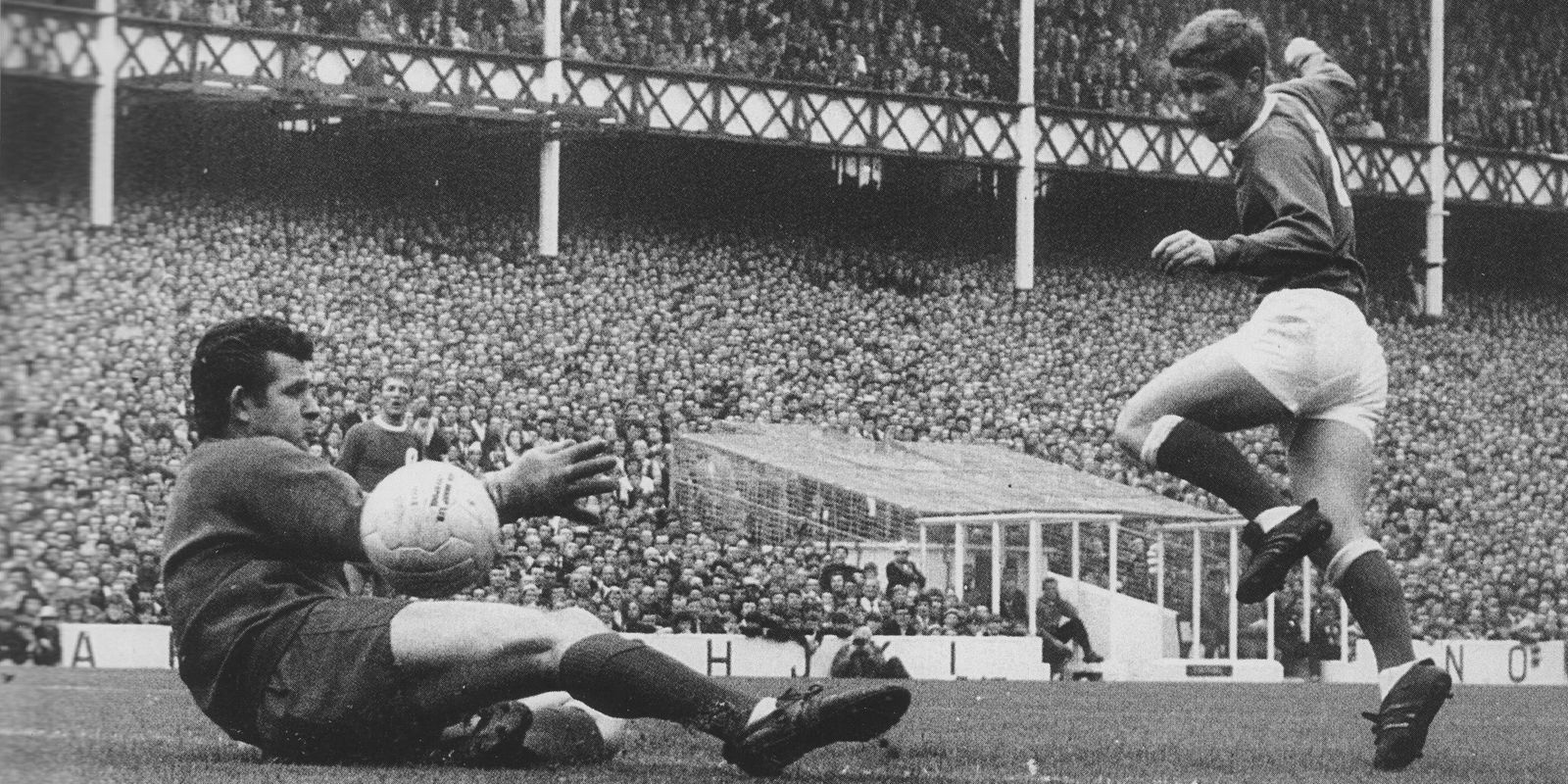
IN THE BEGINNING ...
The Merseyside derby has always generated interest, intensity and excitement – right from the very beginning.
Two years after the infamous split which rocked football, the two fierce rivals met for the first time at Goodison Park.
The previous fixture staged at Goodison had seen 19,900 paying spectators watch Everton beat West Bromwich Albion 4-1. A week later, 12,000 supporters had watched Liverpool held 2-2 at Anfield by Sheffield United.
But on Saturday 13 October 1894, a staggering gate of 44,000 – a new Football League record – was recorded as a fixture which would become the most played derby match in English football was staged for the first time.
While the record crowd was filing in, Liverpool Schoolboys beat Nottingham Schoolboys 3-0 in an exhibition match – a scoreline which would be replicated by Everton.
Tom McInnes holds the honour of scoring the first Merseyside derby goal, after just 10 minutes – and Alex Latta doubled the home team’s lead on the hour.
Jack Bell sealed the first Mersey derby victory two minutes from time.
So celebrated was the success that the Everton Directors offered their players, along with their normal win bonus, a specially-made silk hat valued at 20 shillings.
Whether those players paraded the natty new headwear after the famous victory is sadly unrecorded.
GOODISON'S RECORD GATE
Goodison’s record attendance was once 74,721 – for a match which did not include Everton!
In January 1948 an enormous gate of more than 74,000 crammed into Goodison Park to watch champions Liverpool face FA Cup holders Manchester United in an FA Cup fourth round tie – with an estimated 10-15,000 more locked out!
United had been drawn at home, and with Old Trafford still being repaired from bomb damage sustained during the Second World War, United had chosen to play the cup tie at Goodison.
The record stood for 239 days – until Everton entertained Liverpool in the third league derby to be hosted at Goodison since the First Division had resumed.
A staggering gathering of 78,299 witnessed a dramatic affair.
With the scores goalless, the great T.G. Jones limped to the touchline to receive attention to an injury in the 79th minute and while Everton were down to 10-men the Reds took advantage scrambling a goal by Joe Fagan.
For six minutes the home fans licked their wounds, then in the 84th minute a penalty was awarded and Ephraim ‘Jock’ Dodds stepped up to slam home the equaliser.
THE LIGHT SHOW
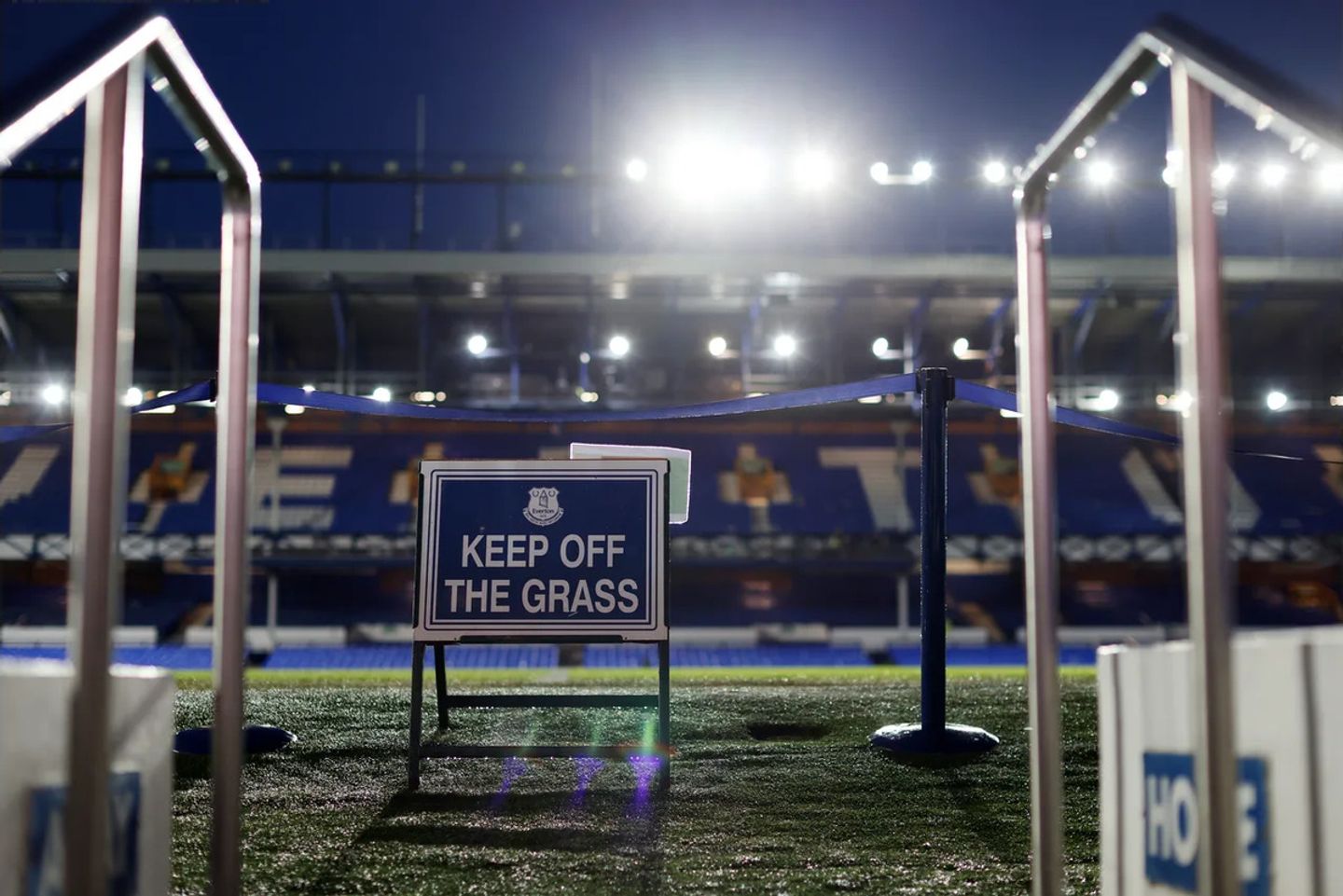
Wednesday will see not just the final Goodison derby, but the last under the Goodison lights.
It has been nearly 70 years since they were first switched on - and, fittingly, the opposition the night of 9 October 1957 was Liverpool.
The Liverpool Echo headlines the previous night proclaimed: GOODISON FLOODLIT GAME MARKS BEGINNING OF A NEW SOCCER ERA.
The report read: “Tomorrow will be a memorable day not only in the history of Everton, but of the Liverpool club as well and Merseyside football generally.
“It marks the beginning of floodlit football in this city, and we could have nothing better to usher in the new era than a meeting of our two senior sides.
“At one time Everton considered inviting a leading Continental team over for the occasion, I am glad they decided otherwise.”
A special edition of the newspaper was published the following day to commemorate the occasion which attracted 58,771 fans, who saw an Eddie Thomas brace give Everton a 2-0 win.
FRIENDS REUNITED
Goodison hadn’t hosted a league derby for 12 years.
It had been seven-and-a-half years since an FA Cup fourth-round tie between the city’s closest rivals at Goodison attracted 72,000.
So when Liverpool’s promotion from the Second Division in the spring of 1962 ensured a revival of one of football’s greatest rivalries, interest was unparalleled.
The fixture list staged the Goodison derby first, on 22 Septembe and the Echo’s Michael Charters suggested, “The ground record of just under 79,000 must be in danger of being beaten".
In the event, Everton announced a crowd limit of 73,000 would be set.
For the first time since the original clash in 1892, all 22 players were making their derby debuts.
And, predictably, the clash was wrapped in controversy.
In the very first minute, Everton striker Roy Vernon thought he had given his side the lead, only for referee Howley to rule a foul on goalkeeper Jim Furnell.
Mr Howley was centre of attention again in the 25th minute when he awarded Everton a penalty, fired in by Vernon.
After 38 minutes, Kevin Lewis hooked an equaliser, then 17 minutes after the restart Johnny Morrissey restored Everton's lead but with just a minute remaining and Everton fans starting to celebrate, Roger Hunt ended the match as sensationally as it had started by ramming in an equaliser.
AN INCREDIBLE TREBLE
What happened after the whistle blew to kick off the 1966 Charity Shield was underwhelming.
But the parade before kick-off was unique in the history of English, if not world football.
Everton and Liverpool put on a display of treasure which even Buckingham Palace would have struggled to match.
Everton captain Brian Labone trotted around Goodison Park proudly holding the FA Cup. Liverpool counterpart Ron Yeats held the League Championship trophy.
While forming a priceless vanguard, Everton World Cup winner Ray Wilson and his England teammate Roger Hunt held the Jules Rimet trophy won at Wembley just a fortnight earlier.
The only goal of the game was scored by Liverpool striker Roger Hunt after nine minutes.
But it was the last match an Everton team would play before a flame-haired talisman breathed fire and brimstone into their ranks.
Forty-eight hours later they signed Alan Ball.
WHO IS THE GREATEST OF THEM ALL?
A week is a long time in football.
So a fortnight? A football club’s entire trajectory can shift in that timescale.
Just 14 days after Everton had been well beaten by Liverpool at Goodison Park in the 1966/67 season’s Charity Shield, Harry Catterick’s men welcomed their neighbours again.
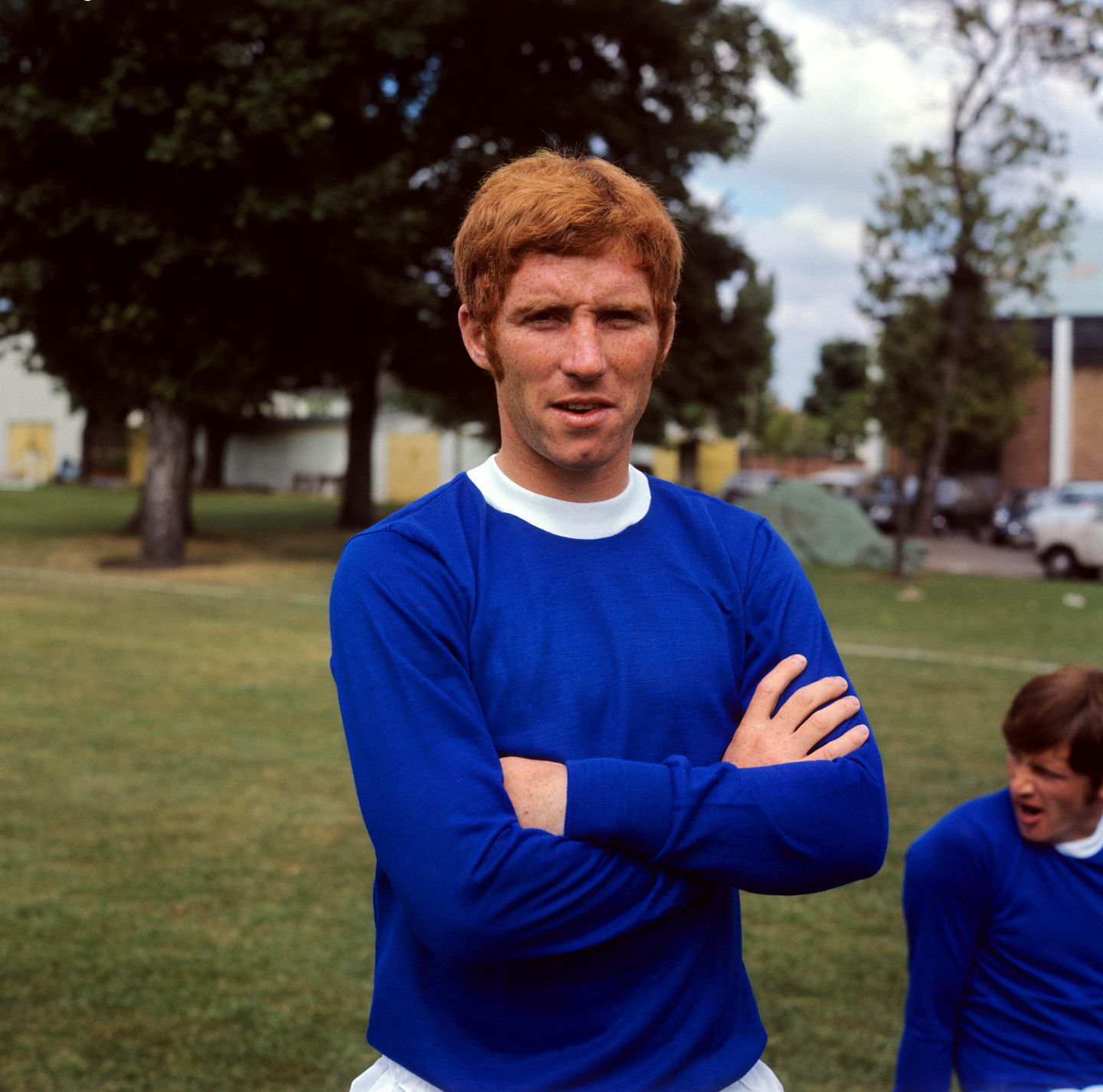
But this time they had Alan Ball in their team.
The World Cup winner wrote about his second Goodison experience as an Everton player – he had made his home debut four days earlier against Manchester United – in his 2014 autobiography Playing Extra Time.
“The noise from the packed crowd as we ran out was staggering,” he recalled. “Manchester United at home had been deafening but this had an extra edge to it. I remember looking up at the Goodison Park clock in the corner of the ground. It was three o’clock and there were no nerves. I was loving every moment of it as if this was my stage.
“I had a fear of nobody and I knew that this was what I wanted for the rest of my life. The image of that famous old clock will never leave me because when I looked at it again it was 12 minutes past three and I had scored two goals. The whole place was jumping.”
Ball later said: “I was running back to the centre circle after I scored the second goal against Liverpool and pure elation welled up inside me. I remember thinking, ‘I just love this place – I want this place forever.’ ”
Tommy Smith pulled a goal back in the 43rd minute before another slice of Mersey football history was made.
Sandy Brown nodded the match-clinching third past Tommy Lawrence to become the first substitute to score in a Merseyside derby.
THE SILVER SCREEN
Not even Wembley Stadium was big enough to stage a Cup tie the world wanted to see in March 1967.
In the 1966/67 season Everton were the FA Cup holders. Liverpool were the reigning league champions – and the two sides boasted three World Cup winners between them.
So when they were drawn to meet in the FA Cup fifth round there wasn’t a stadium big enough to accommodate the fans who were desperate to witness a titanic collision.
Such was the demand to see the game - in an age when the only televised club match ever screened was the FA Cup final - a novel solution was sought.
The match was also screened live on closed-circuit TV at Anfield.
So 64,851 crammed into Goodison, 40,500 watched across the park – and they saw Alan Ball score the only goal of the game.
Afterwards, Liverpool supporting comedian, Jimmy Tarbuck, was trudging away from Anfield having watched the closed-circuit relay – with his usual gap-toothed grin wiped off his face by Everton’s victory.
One enterprising Evertonian spotted him and quipped: “Don’t worry Jimmy, it’s only a film!”
KING OF GOODISON
The bright and unseasonally warm autumn morning of 28 October 1978 was derby day on Merseyside – and Evertonians woke up to the knowledge they had not beaten Liverpool for seven long years.
Such was the class of Bob Paisley’s multi-trophy winning side that any improvement on that statistic didn’t look likely.
They went into the Goodison derby with the remarkable record of played 11, won 10, drawn one, 35 goals scored and just four conceded!
But this was also a very good Everton team.
Everton were also unbeaten in 11 matches from the start of the season – a sequence they would extend to 19 – had made progress in the League and UEFA Cups – and had an unpredictable maverick at the heart of their midfield who took great delight in riling the Reds.
Two of the paltry 16 goals conceded by the Liverpool defence that season were scored by one man.
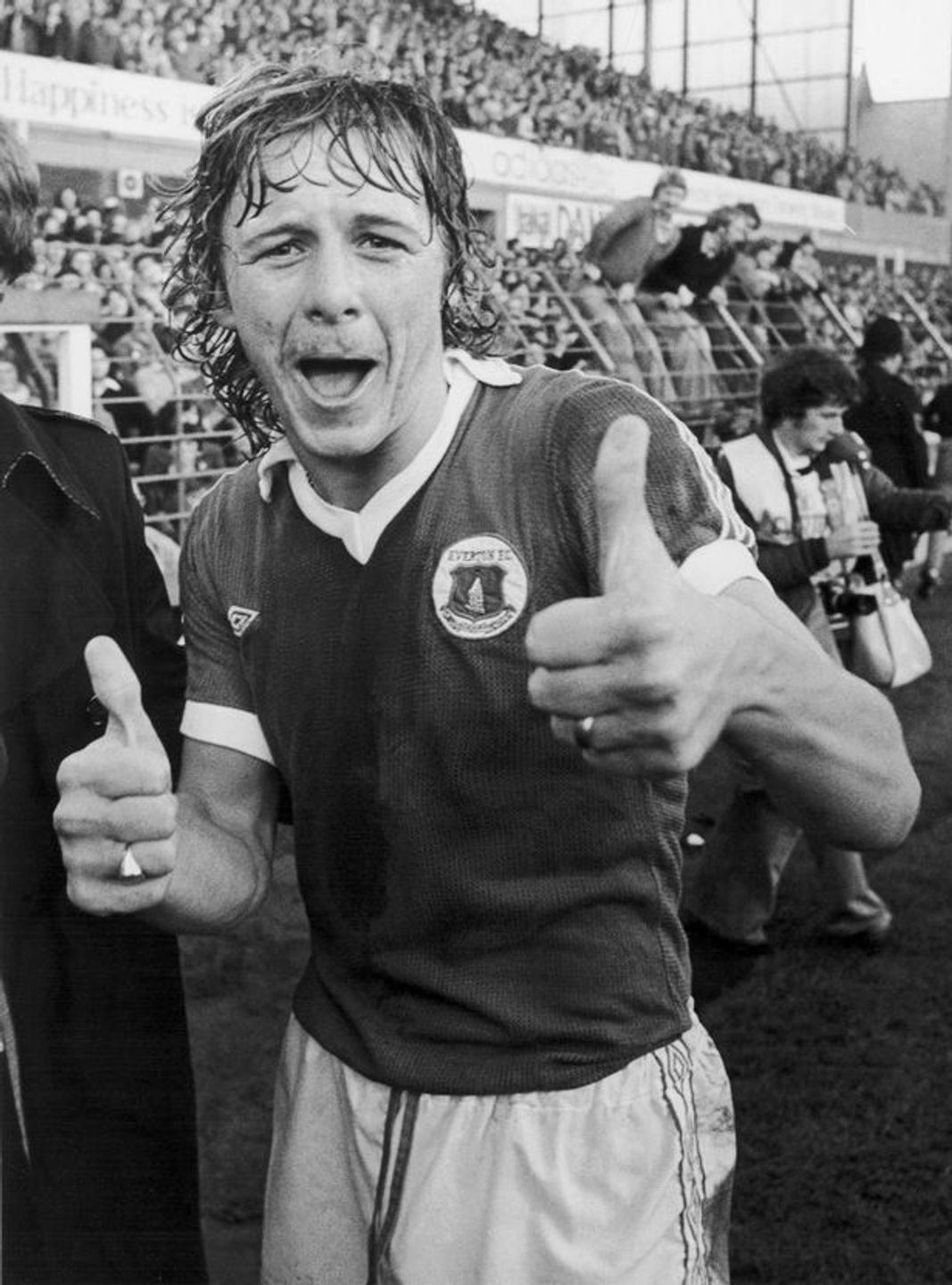
Andrew Edward King.
King’s matchwinner which ended that long winless drought earned him cult hero status amongst Evertonians.
John Motson’s commentary became iconic amongst Evertonians.
“It’s going to fall for Andy King,” he screamed in that trademark, high-pitched timbre. “Oh, yes he’s done it! Andy King has scored. Everton have taken the lead. A typical King goal. And Goodison Park goes absolutely mad. Would you believe it?”
DIXIE'S FAREWELL
1 March 1980, was the day William Ralph Dean, AKA Dixie – the greatest goalscorer in the history of English football – took his last breath on this earth.
And he drew that breath at Goodison Park, at a derby match, watching his beloved Everton play their fiercest rivals.
Earlier in the day Dixie had listened to a stirring eulogy delivered by Liverpool's greatest ever manager – a tribute which ultimately became his obituary.
At the Holiday Inn in Liverpool city centre, after a pre-match lunch, Bill Shankly got to his feet and in that resonant brogue declared: "We have in our midst today, ladies and gentlemen, a man who was the greatest at what he did. You can't say that about many people in history, whatever branch of life you're talking about. But you can say that about Dixie Dean.
"Oh, yes. His record of goalscoring is the most amazing thing under the sun. Nobody will ever come near to equalling his fantastic feat of scoring 60 League goals in a season.
"I played against him a few times when I was with Preston. He was a big, cocky, confident man, arrogant in his approach to the game. That is the hallmark of a great player and Dixie was the greatest centre-forward there will ever be.
"Nobody who's ever been born could head a ball into the net like him. When he connected it frightened people. You couldn't stop him scoring. He belongs in the company of the supremely great ... like Beethoven, Shakespeare and Rembrandt."
Just hours later Dixie breathed his last after suffering a heart attack after Peter Eastoe had scored for Everton.
That night's Match of the Day, for the first time in the programme's history, silenced its famous theme tune at the end of the show.
A black and white image of the great man filled the screen instead - accompanied by a powerful, poignant silence.
LFC THANKS EFC … WE NEVER WALKED ALONE
The 140th league derby match played out at Goodison Park on May 3, 1989 was low on incident.
But its symbolism and poignancy was immense.
Liverpool’s players had not kicked a ball since the appalling tragedy at Hillsborough 18 days earlier – and a trip to their neighbours and closest rivals was seen as the most appropriate occasion on which to make a return to competitive action again.
Everton had not stepped out at Goodison Park since the disaster.
The fences, so culpable in one of British football’s worst disasters, had been removed and the atmosphere at Goodison was surreal.
A giant banner, draped from the Stanley Park stand, carried a simple, but moving message from the Liverpool supporters: ‘The Kop Thanks You All. We Never Walked Alone.”
An Everton stadium announcer declared: “Your loss is our loss, too. We will observe a minute’s silence.”
Then at half-time a group of fans paraded a chain of 95 red and blue scarves, the number of victims of the tragedy at that time and a number which would sadly grow, around the perimeter track also holding a banner which read “LFC fans thank EFC fans.”
The final result of Everton 0 Liverpool 0 was immaterial on an enormously emotional evening.
DERBY WHICH HAD EVERYTHING... EXCEPT A WINNER!
It's often cited as the greatest derby ever… the 1991 FA Cup fifth round replay which Liverpool led four times, and were pegged back four times.
After the remarkable 4-4 draw Everton boss Howard Kendall declared: “It was one of the greatest cup ties that has ever been seen on Merseyside, if not in football.”
His Reds’ counterpart, Kenny Dalglish, added: “If there have been any better cup ties than that I wish somebody would send me a video.”
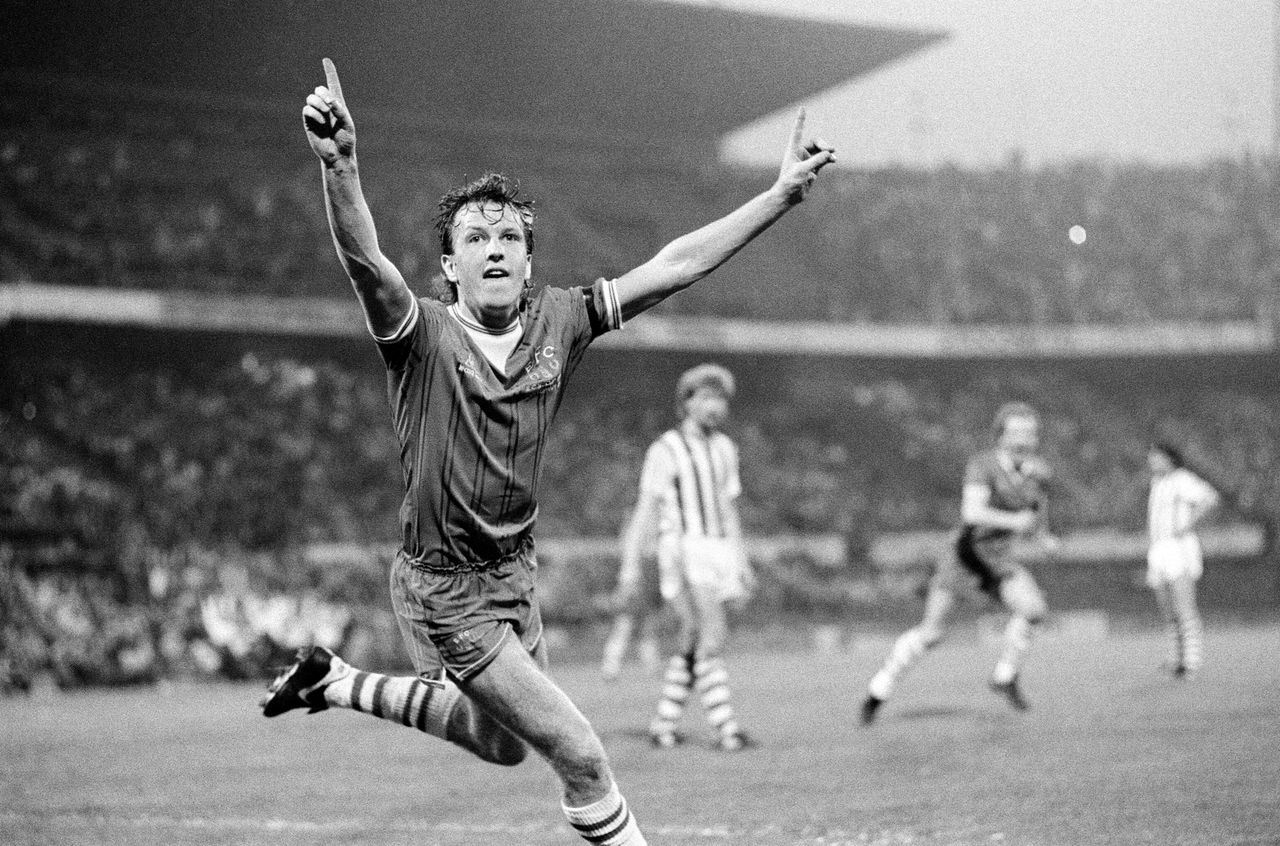
Graeme Sharp, scorer of the first two Everton goals, agreed: “It was just different class, the greatest game I have ever played in. I don’t think you will ever see a game like that again.”
While John Barnes, who scored the goal of the game, said: “It was an outstanding match.” And his teammate Gary Ablett added: “I haven’t been involved in a game like that since I left school.”
BLUE MONDAY
Everton’s first appearance on the new BskyB channel's Monday Night football show was the 147th Merseyside derby at Goodison Park.
It would be a historic night for one vastly experienced Everton player – and a poignant one for a rookie midfielder.
Commentator Ian Darke prophetically started his night’s work by saying: “Peter Beardsley … bidding to become only the second man in history to score for both clubs in Merseyside derbies. The other was David Johnson.”
But while Darke talked of “a couple of shocks” in the Everton starting line-up, 19-year-old Billy Kenny, making only his fourth league appearance, wasn’t even mentioned.
He certainly was after the match.
Reds skipper Mark Wright rose to bullet a header into the Gwladys Street net after an hour, but seconds later Mo Johnston wheeled onto a penetrating pass forward from Ian Snodin and clipped an equaliser in off goalkeeper Mike Hooper’s right hand post.
But it was young midfielder Kenny who was named the sponsors’ man of the match after an assured engine room performance. Manager Howard Kendall later revealed he had asked the teenager to sign a new two-and-a-half year contract just hours before the match.
“I thought the lad was absolutely tremendous,” said Kendall afterwards. “The victory was cause for celebration in itself but the best news for me was before the game when Billy signed that contract.
“He had earned it and he fully justified it on the night, passing the ball superbly and looking a top class prospect.”
What happened next in the Billy Kenny story wasn’t such a feelgood story, but his match-winning display in Everton’s first Monday Night Football appearance certainly was and was something which could never be taken away from him.
SLAM DUNC!
It was the night Duncan Ferguson became a legend, before he became a player.
Everton’s start to the 1994/95 season had been the worst in the club’s 106-year league history.
Just one streaky win, five draws and eight defeats from 14 matches had left the Club rock bottom of the Premier League, marooned on eight points – and resulted in manager Mike Walker being relieved of his duties.
Ferguson had started the last five league matches of Walker’s ill-fated tenure, without troubling the scoresheet.
But the man appointed to replace Walker was a centre-forward of 24-carat Royal Blue heritage – Oldham boss Joe Royle.
“We hoped a big old English centre-forward would be able to motivate a big young Scottish centre-forward,” said Blues chairman Peter Johnson.
He did just that.
Ferguson soared higher than the Gwladys Street crossbar to direct a firm header past David James to open his goal account for the Club – a centre-forward wearing number nine, opening his account in a Merseyside derby, down at the Gwladys Street End.
It got even better. A minute from the end Ferguson challenged James for another cross, the spooked Reds keeper punched the ball against Ferguson and it broke kindly for Paul Rideout to slide in a match-clinching second.
THREESY DOES IT!
Derby celebrations had been in short supply at Goodison Park throughout the '90s and noughties.
But the 204th Merseyside derby provided something very special.
Everton hadn’t scored three goals in a league derby since August 1966. It had been 11 years since an Everton player had scored twice in a match against Liverpool. And the Toffees hadn’t enjoyed a three-goal margin of victory over their fiercest rivals since a 4-0 win at Anfield, 42 years earlier!
All three statistics were blitzed as Everton trounced their fiercest rivals in an afternoon to remember.
“It is hard to recall a team so happy in victory,” reported the following day’s Observer. “David Moyes, who cares passionately about this club, could not stop punching the air, slapping backs, waving to the crowd and generally looking like a 10-year-old who had just seen his first whale.”
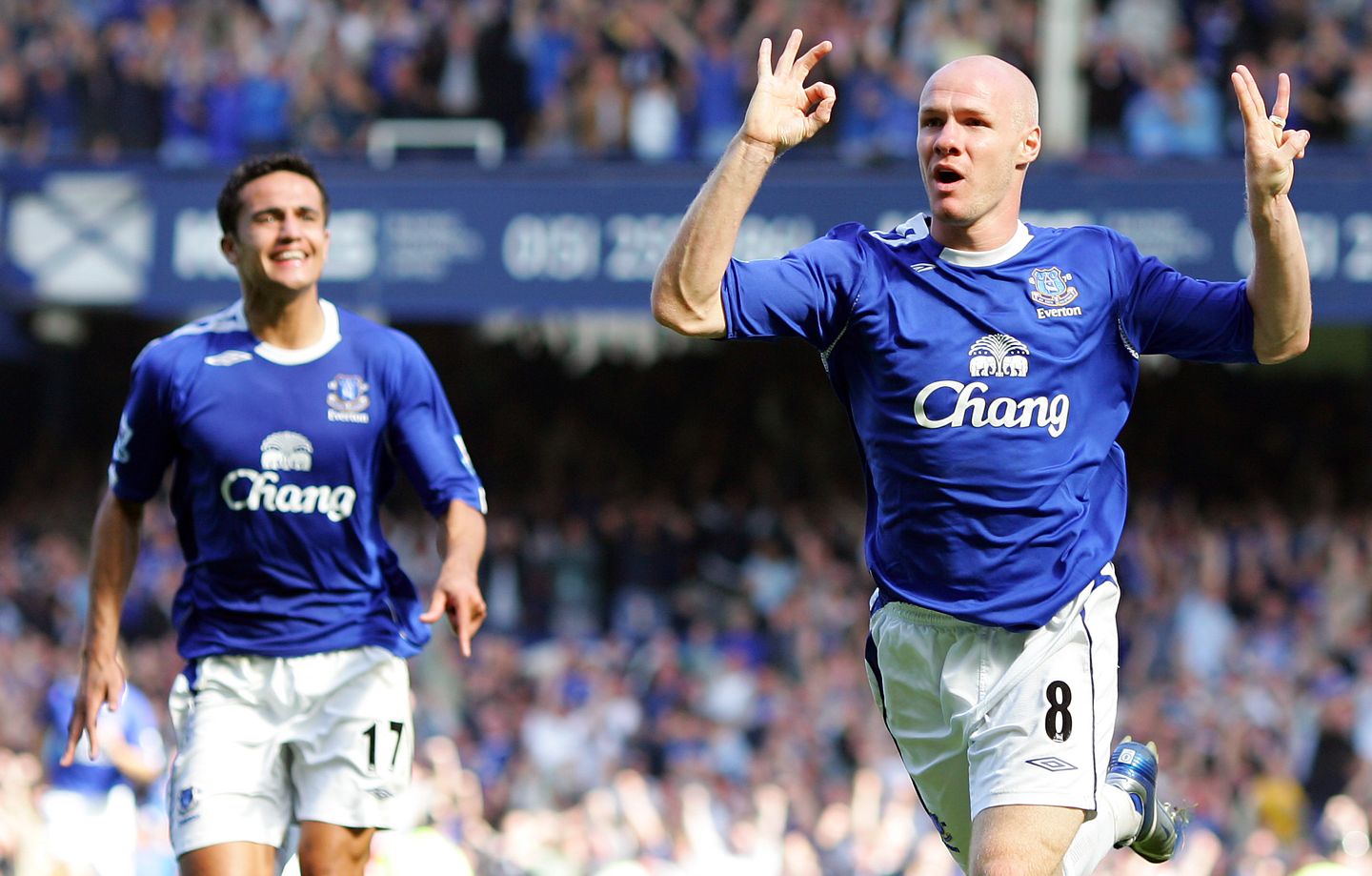
Andy Johnson scored two goals on his derby debut, in a 3-0 rout, ensuring that the words: “Der, der, der der! Andy Johnson!” roared around Goodison Park and the surrounding area for hours after the lunchtime kick-off.
Tim Cahill had sparked the demolition job with his third goal in as many derbies – but the first as a winner.
THE GREATEST DERBY EVER?
Neither side was victorious after the 23 November 2013 classic – but both sets of fans were left smiling, and shaking their heads in disbelief, following a rollercoaster ride of a derby completely out of keeping with traditional derby match fare.
“A modern classic,” declared Monday’s Echo, adding: “The Mersey press box is made up of plenty of former fans who cut their teeth on the terraces of Anfield and Goodison before making their way in front of a keyboard. And the dazed, exhilarated, head-shaking expressions post-match spoke volumes. They’d just witnessed a modern classic.”
The scoreline finished 3-3 but that was only half the story.
After 90 minutes of spellbinding action referee Phil Dowd allocated four minutes of added time – and even in that brief spell both teams had two glorious chances to win, while Liverpool’s Daniel Sturridge had a goal disallowed.
The match had goals, howling misses, great goalkeeping, one moment of controversy and an unyielding devotion to attacking football borne of the principles of the two respective managers.
“Wow!” was Brendan Rodgers immediate reaction in his post-match press conference.
While in a local newspaper column, published on Monday morning, Ian Snodin declared: “Like everybody else privileged enough to be at Goodison Park on Saturday, I don’t think I’ve ever seen a better derby match.”
No-one was arguing.
WRITTEN IN THE STARS
It was written in the stars.
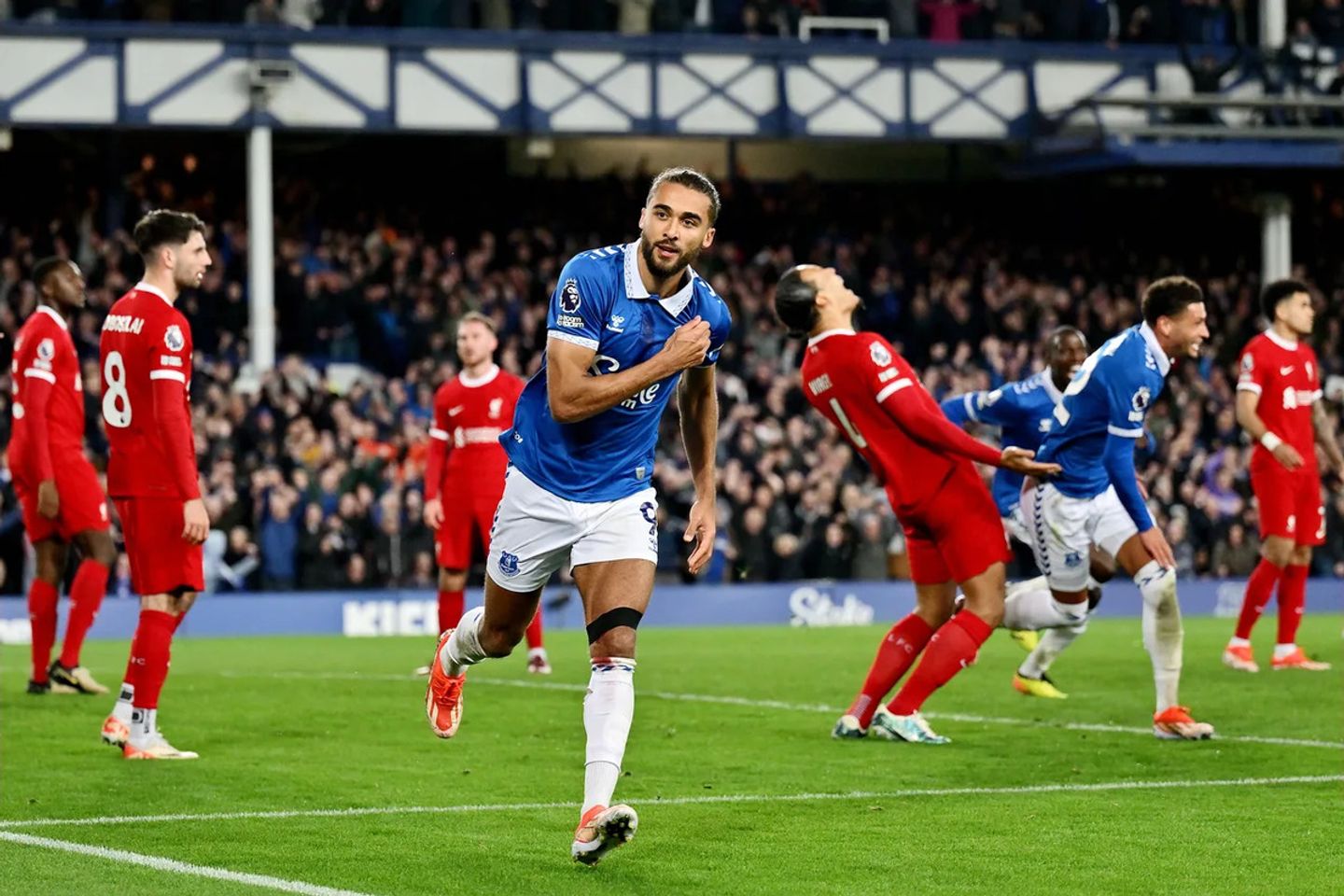
On 24 April 2024, Everton entertained Liverpool in the 244th Merseyside derby.
The blue half of the city hadn’t celebrated success in a derby for 14 years – their only previous triumph coming at Anfield in a lockdown derby watched by precisely zero supporters.
But 24 April wasn’t just any old date.
The last time Everton had played at Goodison Park on a Wednesday night on 24 April had been 39 years earlier. The visitors? Bayern Munich on a night widely regarded as the greatest – and noisiest – in the Club’s history.
Almost 40 years later, a crowd 11,000 fewer than that celebrated night decided to stake their own claim to supporting immortality.
As a Celtic-supporting former Chelsea and Everton player, Pat Nevin knows a thing or two about crowd noise.
And after that 244th Merseyside derby he declared: “More than anything else, the crowd.
“I mean honestly. I go to a lot of Premier League games, I travel round all the time and you know where the good, the bad and the ugly are with their crowd noise.
“From before the start of the game it was mental. Off the scale. It really was.
“I’ve been at some big nights and I’ve played in some big nights. I can close my eyes right now and I can remember the 4-4 game and what it was like that night.
“This felt a bit like that. An evening game, against Liverpool, a battle, the fight, the fans … and seeing the cameras focusing on the Everton fans. You wanted to freeze it, that ecstasy.
“For all the fact that we’ve had a hard season, it will be one of the best memories you’ve had as an Evertonian. If you were a youngster watching the game you will have had absolutely one of your favourite memories and it will stay with you for the rest of your life. It’s just brilliant what football can give to you.”
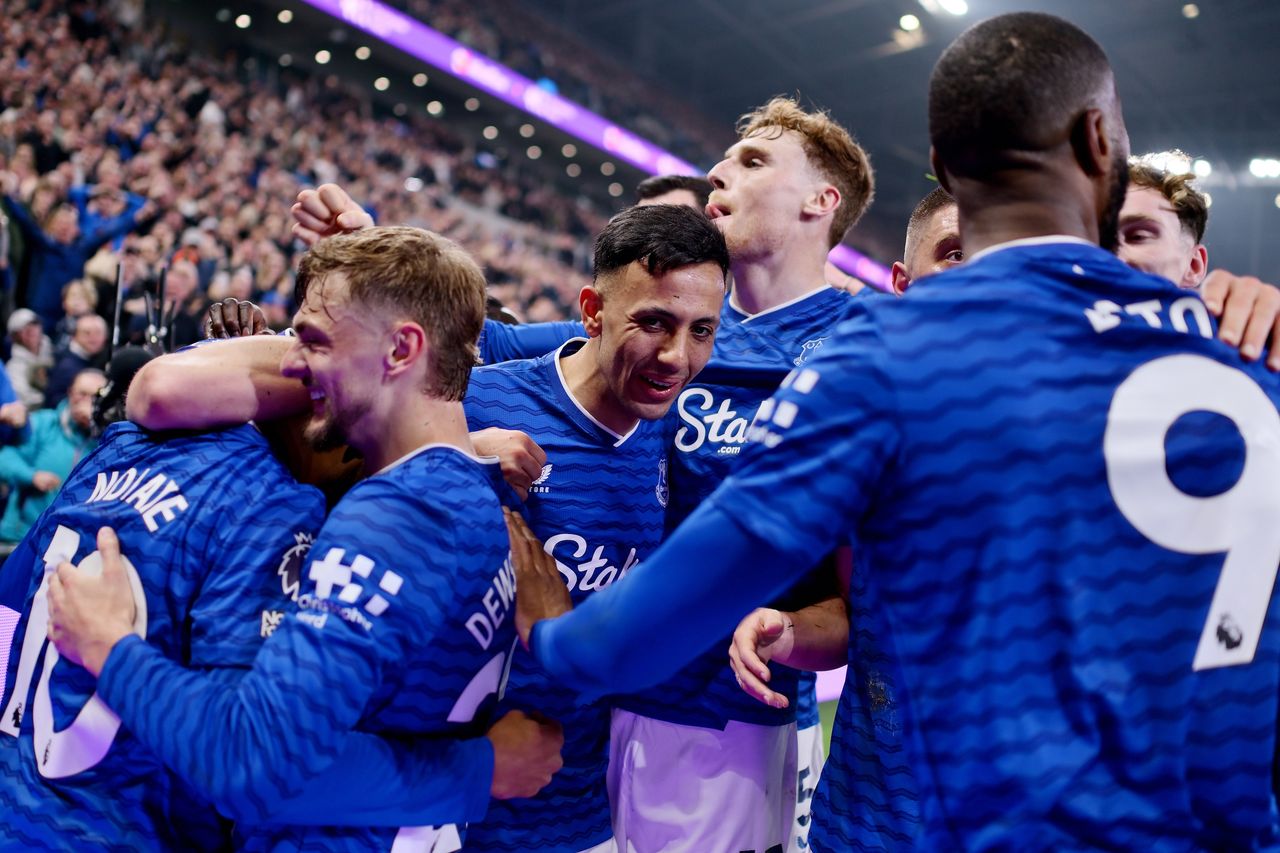
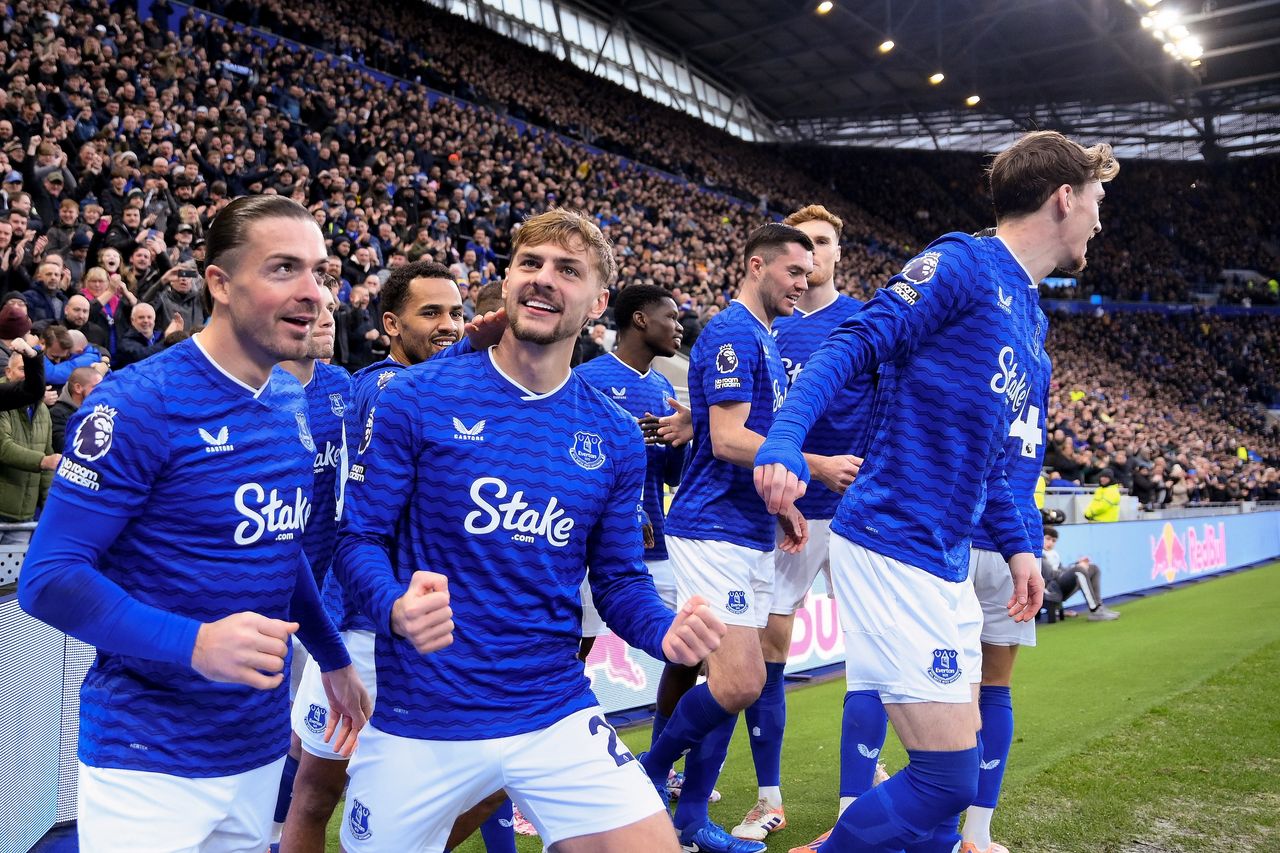
What 14 footballers gave to Evertonians that night was truly magical.
Jarrad Branthwaite and Dominic Calvert-Lewin scored the goals that sent Goodison into ecstasy.
Gary Neville, on duty for Sky Television, said: “This was a night that we’ll talk about at Goodison Park. This gantry is the only one left in the league that shakes when this crowd behind us jumps and goes crazy - and the fact that we’re not going to be in this ground witnessing these types of atmospheres is quite sad.
“It’s what I felt towards the last part of the game at this great old ground.
“Everton need to go to their new ground, we know how it works – but this is one of the last great grounds in the Premier League. It’s been around such a long time, I’ve played here so many times and it’s been at its absolute best tonight.”
















© Copyright 1878 - 2026 Everton Football Club