Long Read
19 February 26
It’s one of the great forgotten goals of Everton’s most glorious era.
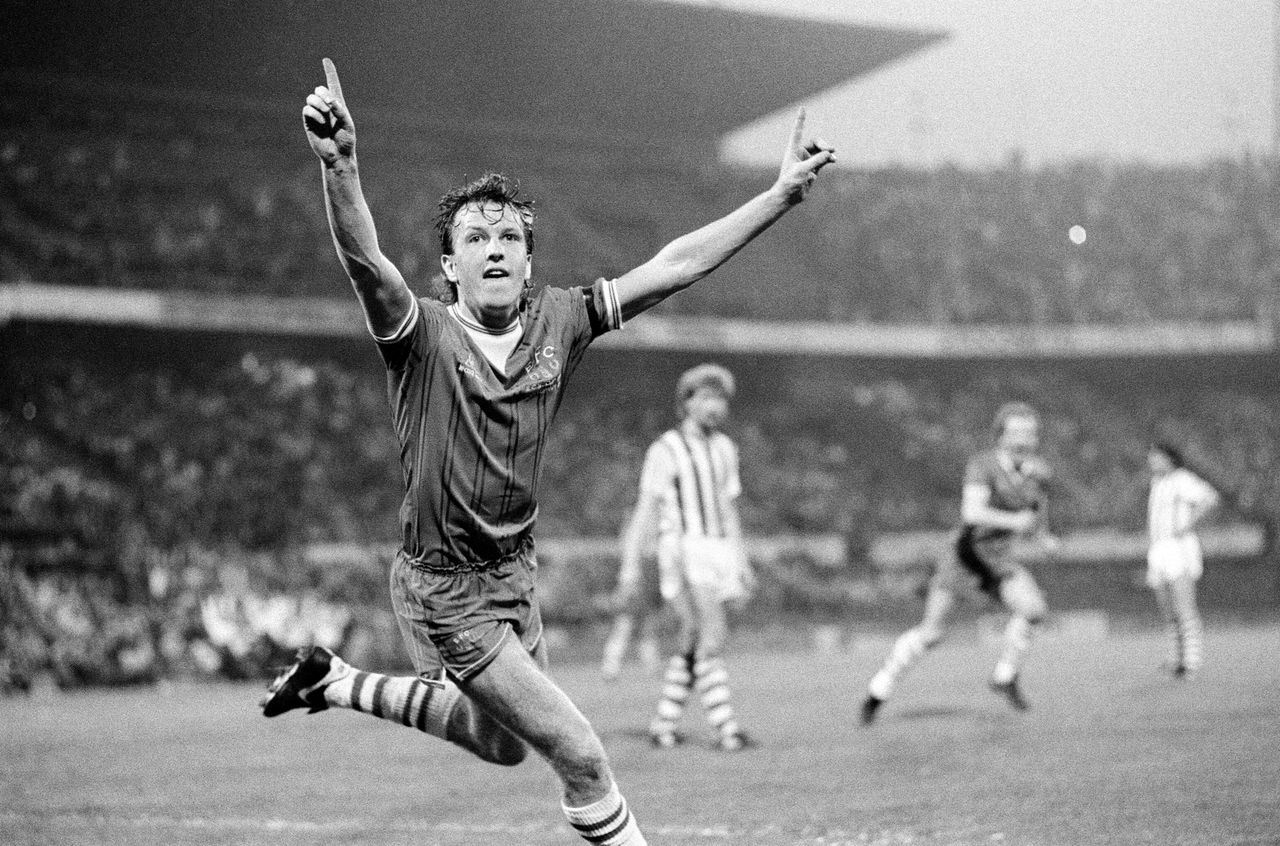
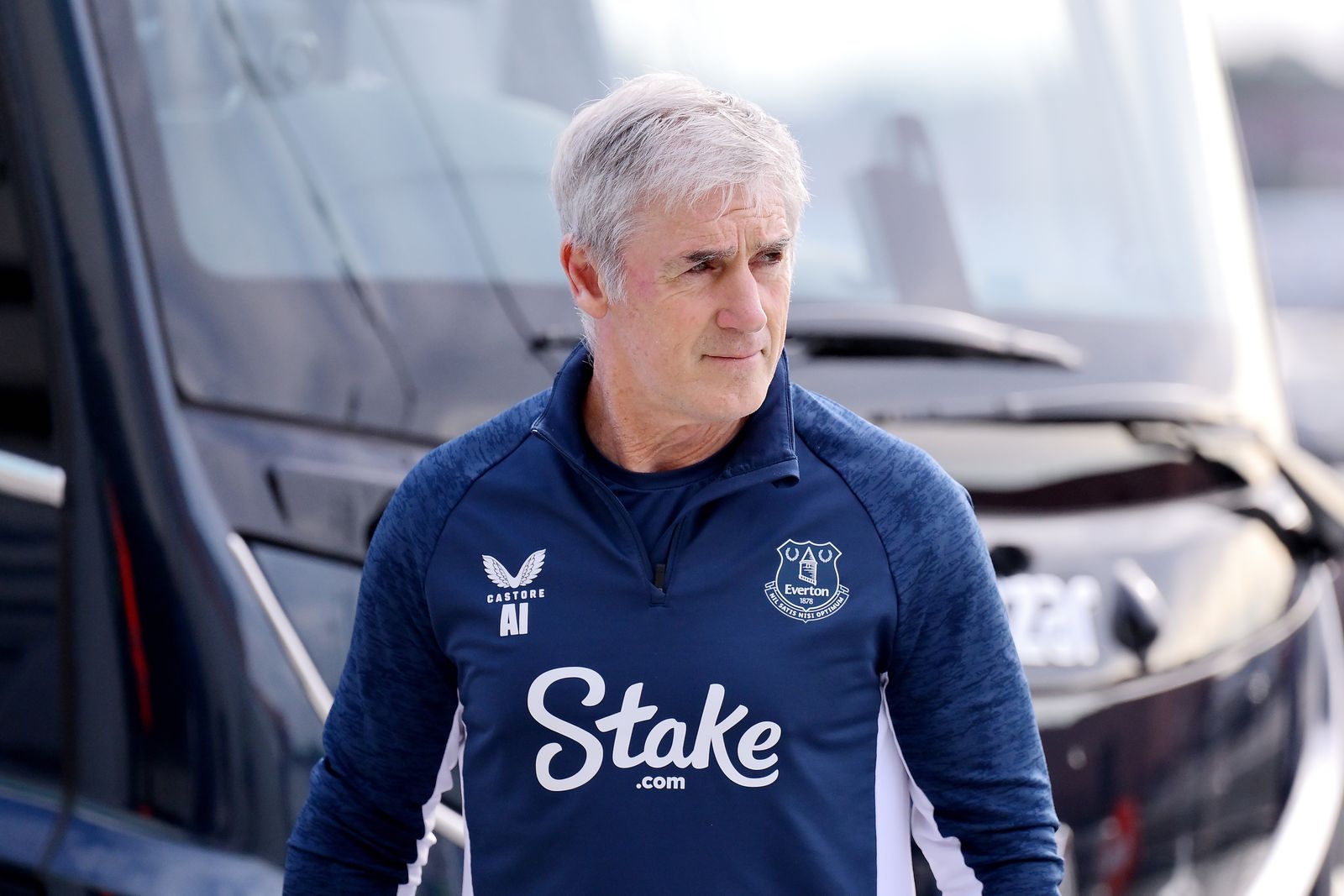
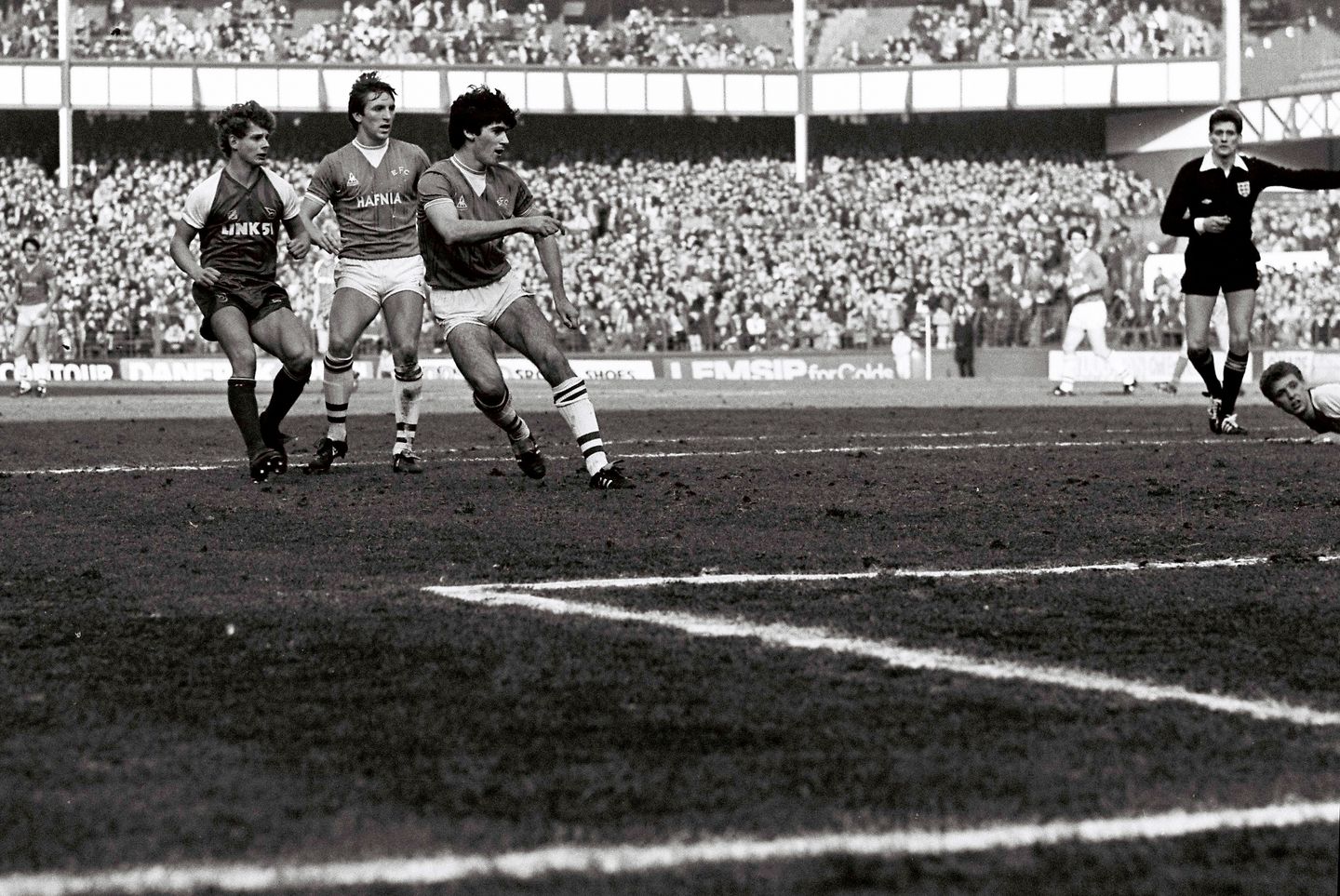
Eleven days before Adrian Heath latched on to Kevin Brock’s backpass and just five days after a pivotal league win at Birmingham City, Everton Assistant Manager Alan Irvine scored a Cup classic – one which sparked a run which would end in glory.
It was at Stoke City in January 1984, and it clinched an FA Cup third round victory, but the most enduring talking point subsequently became Howard Kendall’s decision to dispense with a pre-match team talk and fling open the dressing room windows so the players could hear the huge travelling army of Evertonians backing their team.
If that became the retrospective talking point, the Monday morning headlines were all about Irvine’s goal.
The Liverpool Echo reported: “Irvine had been turning defender Peter Hampton inside out with his skill and pace, and the pay-off came in spectacular style six minutes from time. Adrian Heath, putting in a gritty display against his old club, dipped a telling ball down the right flank that Irvine took in his stride. He attacked the box, left Hampton for dead and drilled an unstoppable left-foot shot into the roof of the net to make it 2-0.”
The Daily Post agreed, summarising: “Alan Irvine settled matters with an even better goal six minutes from time. Stoke, their legs weary, backed off the winger as he cut inside from the right touchline – and a swerving left foot shot into the far corner left Fox helpless and furious with his cover. Irvine tortured his opposing full-back Peter Hampton throughout the afternoon, eclipsing Stoke’s England international Mark Chamberlain.”
More than 40 years on, Irvine is typically modest about the strike.
“They made it sound an awful lot better than I remember!” he smiles.
“It was certainly a very important goal. It was a key game, a massive game for Howard Kendall. If we’d lost the game Howard would have been under severe pressure, but that set us on the way and, of course, we got to two cup finals that season.”
After the famous first all-Merseyside final in the Milk Cup at Wembley, Everton lost a tight replay. Two months later they were back to beat Watford in the FA Cup final, but this time Irvine was a frustrated onlooker.
After starting 33 of the previous 35 matches, including every round of the League Cup and every FA Cup tie up to the semi-final, injury struck at the worst possible time.
“I got the injury in that Stoke game funnily enough,” he recalls. “I got a bang on the front of the knee and it chipped a bit of bone off the back of my patella. But I was then able to keep playing. I started 33 of 35 but the Milk Cup Final went to extra time on a really muddy pitch, then the replay at Maine Road came just a few days later, again on a heavy pitch, and my knee just blew up. It was one match too far.
“It was a hard one to bear because I’d played in every round of the FA Cup and scored a couple of goals, and here I was now with no chance of playing in the semi-final or the final.
“In fact, when the semi-final was on, I had an operation to flush out my knee and I was lying on a mattress downstairs listening to the game on the radio. I couldn’t even watch it on the TV.
“I was delighted for the lads when they got to the final and it honestly hadn’t even crossed my mind up to that point. But when the boys went up the steps to get the cup and the medals, I thought, ‘oh no, look what I’ve missed’. That was a really strange moment, because there I was on crutches, absolutely ecstatic when the final whistle went but that absolute pleasure probably turned to a bit of envy. In those days players didn’t get recognised that they’d been part of the squad. You were just forgotten.”
So the man whose spectacular goal sparked the Cup run at Stoke, the player who opened the scoring in the fifth round against Shrewsbury and the winger who played an integral role in the quarter-final win at Notts County never received a medal.

Never say never. Four decades on, the Everton Heritage Society is investigating the possibility of a retrospective medal for Irvine, similar to how Roger Kenyon, Frank D’Arcy, Paul Wilkinson and Warren Aspinall received title medals almost half-a-century after they contributed to the 1970 and 1987 successes.
“Yes, the Society are looking into it,” confirms Irvine. “I’d be happy to pay for the medal but we’ll see. If it happens, then that’ll be lovely. But if it doesn’t happen, well, I’m just in the same position I’ve been in since 1984!
“As I said, it was a really strange feeling – just those few moments when the boys went up to get the Cup. Of course, when they come back down you’re in amongst it anyway, and you feel better again, you forget about it. But it was a weird feeling to watch them going up.”
As a result of that ill-timed knee injury, Irvine joined an elite club of Evertonians who made their last appearance for the Club in a Cup final. Other names include Gary Lineker, Paul Bracewell and, ironically, Trevor Steven, the man whose form after Irvine’s injury contributed to his departure.
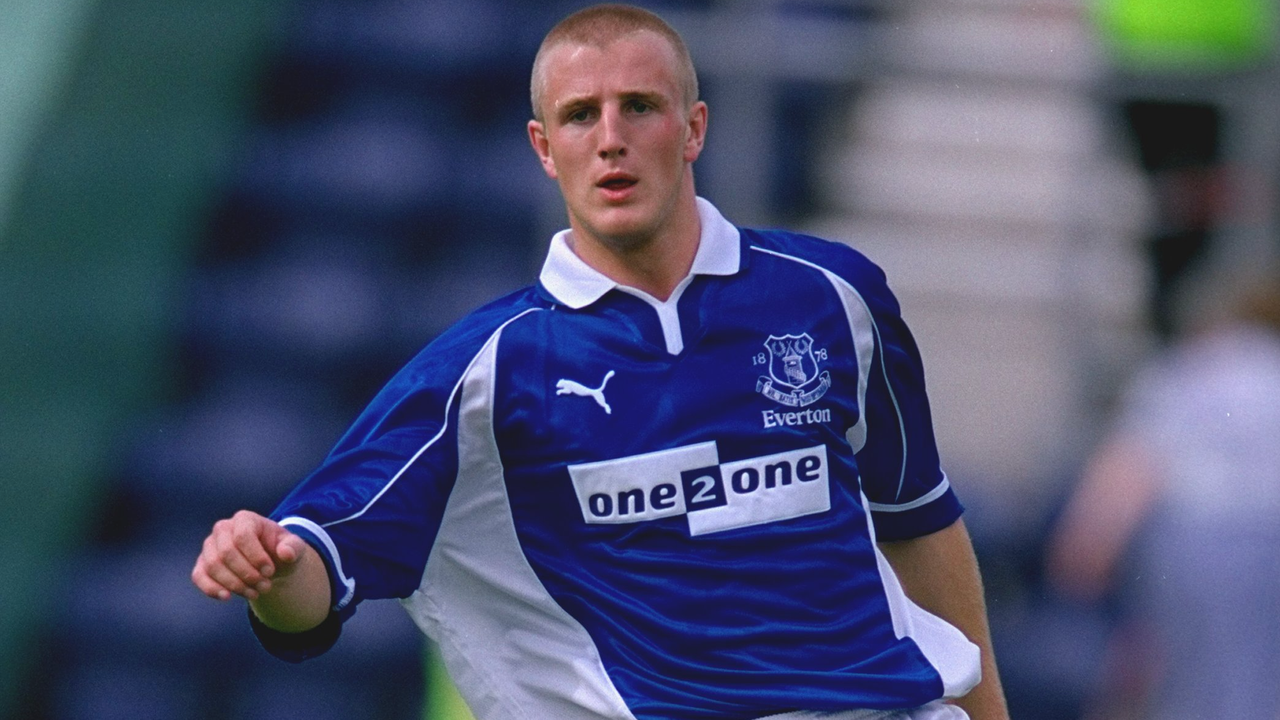
Signed from the amateur club, Queens Park in the summer of 1981, Irvine became Howard Kendall’s first signing, in curious circumstances.
But his burning desire to play football ultimately led to him leaving, too.
“Gordon Lee was the manager who had made the decision to offer me a contract,” explains Irvine. “But he was sacked just hours after I’d met him!
“He got the sack but said to me, ‘I won’t be here, son, but sign for this club. It’s a brilliant club’.
“That was a huge thing. There were 24 clubs interested in signing me because I was an amateur from Queen’s Park so effectively I was a free.
“I whittled that down to Glasgow Rangers – I was a Rangers fan as a boy – Everton or Manchester City. But I was leaning very heavily towards Everton. They had been right in there since the previous October trying to sign me, so I was always likely to go with Everton but when Gordon said that, that made my mind up.
“He’s just been sacked and he’s telling me to sign for the Club. I’d love to think that if I was in the same position I could do that myself, but I don’t know if I could!
“You’d have thought he might have been feeling a bit shell-shocked or bitter, but he didn’t. That was a huge thing.
“I met him a few times afterwards and he always said to me, ‘I told you it’s a great club.’
“So I signed but I was an insurance broker at the time, and I thought I’d be back in insurance in three years’ time.
“I’d signed a three-year contract and really expected to be back in insurance at the end of it. We’d won the league at Queens Park and my last game was against Cowdenbeath at Central Park.
“My next game for Everton was in Japan against Inter Milan in a pre-season friendly! That shows you the kind of step up I was trying to make.
“I thought, ‘this will be impossible but at least I’d have three years of living my dream being a professional footballer’. If you’d have said to me at the time I’d be playing for Everton’s first team I’d have said probably not, but in the December, I got into the first team and then I played through to the end of the season.
“But I still kept paying my subscriptions to the insurance! I had insurance qualifications and to keep that valid you had to pay your subs every year. So I kept on paying it for 10 years, thinking I’m going back at some point.
“I haven’t paid it for some time now!”
That burning desire to make the absolute most of his unexpected opportunity to play first-team football ultimately led to Irvine moving south to join Crystal Palace. And it was at Selhurst Park where he played an unwitting role in the birth of a future legend of the English game.
Ian Wright scored 387 goals throughout a sparkling career – and his very first came from an Irvine assist.
He explains: “I hadn’t even realised it, but Wrighty told me several years later that I’d made his first goal.
“Obviously it wasn’t significant to me but clearly it was for him because we all remember our first goal. He told me I’d gone down the wing, past the full-back, crossed it and he headed it in. It was really nice working alongside him because he was like me, really late into the game and full of enthusiasm.
“We’d stay out after training. All the boys would go in and we’d think ‘what do we do for the rest of the day?’ So we’d stay out with a bag of balls, me crossing them and him finishing. No goalkeepers or anything.

“I loved it at Palace.
“It was very tough to make the decision to leave. But obviously Trevor Steven had come in when I was injured and done very well. There’s no question about that. That gap had been filled and if you bear in mind there was only one sub in those days, I was very unlikely to ever be used as a sub. You want players who can play in different positions and you very rarely select a winger. We had Alan Harper and Kevin Richardson who could both play different roles. My chances of being a sub were fairly slim and I was desperate to play.
“I came into football fairly late and I didn’t want to be a squad player. I wanted to play first-team football. Howard told me that Crystal Palace had come in and of course their manager at the time was Steve Coppell, a right winger and I thought ‘I could learn from him.’ And I did.
“I don’t regret that decision and I never have.
“It wasn’t an easy decision because I could see the way the Club was going, but it was a career decision.
“I couldn’t be content with that. I’d have been miserable all the time not playing.
“It was brilliant watching Everton win things the next season. Honestly. They were my mates. When I first came in, I was playing in the reserves with the same lads who were now winning things. They were a brilliant bunch of lads and I’d had three brilliant years at the Club and things had gone far better than anyone could have imagined they would do.
“So I had absolutely no regrets. I was jealous of the lads going up to get the FA Cup in 1984 but I wasn’t jealous of them winning the league. I was delighted for them. Absolutely delighted for them.”
And he was delighted with his time at Palace.
“I had a brilliant time there,” Irvine continues. “It was a really good club, different to Everton – not the same size of club at that time, obviously. They were a second division team then but it was also a team that was going to grow and develop under Steve.
“Ian Wright and Mark Bright came in and we started to look like a good team.
“It was a good time, an enjoyable time.
“I loved playing. I still find it hard these days to understand why people aren’t always desperate to play. I always ask players ‘what is it you want out of football? What are you looking for?’ And I hope to hear that ‘I want to play loads of games, I want to win medals and I want to win loads of caps’, all that kind of stuff.”
Alan fulfilled his dream of playing loads of games... and with a bit of luck he may still realise his FA Cup winner’s dream.





















© Copyright 1878 - 2026 Everton Football Club