Long Read
3 March 26
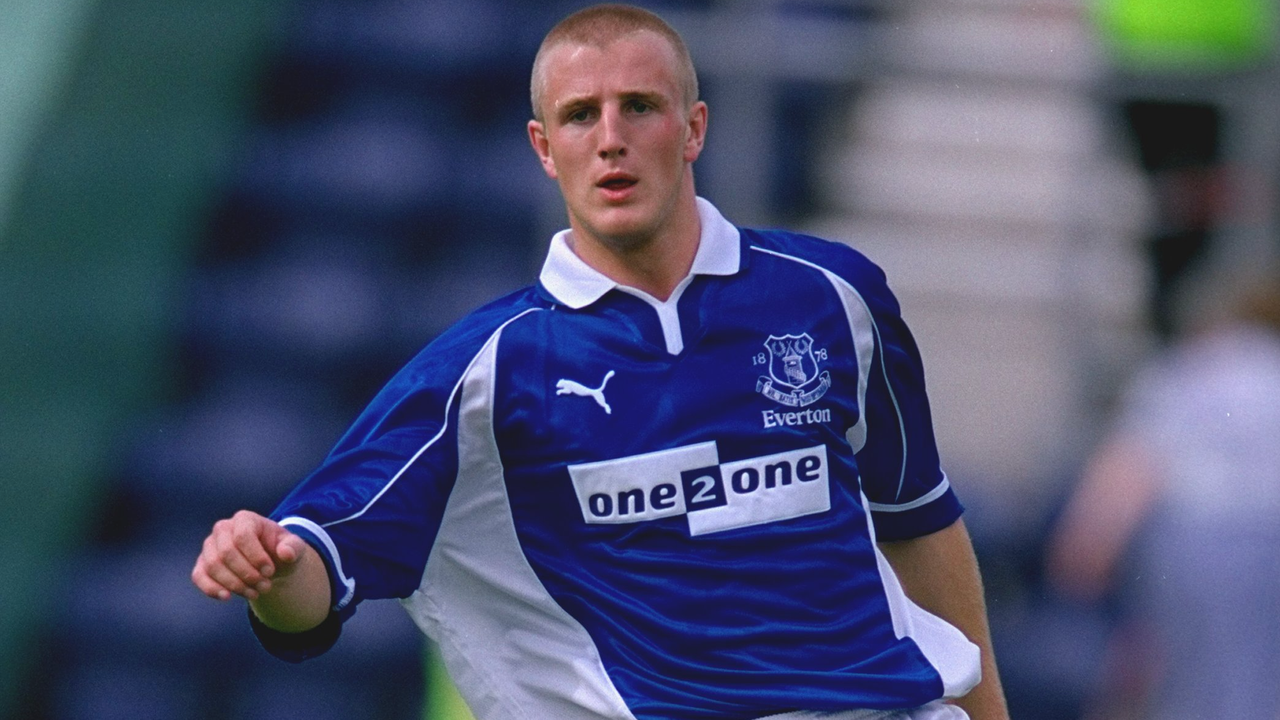
There was a time when Trevor Steven was the quiet man of the Everton dressing room.
A shy 19-year-old from the sleepy border town of Berwick, when he finally drummed up the confidence to speak at one of the squad’s notoriously raucous Chinese dinners, assistant manager Mick Heaton threw out his arms and declared, “Everyone quiet. Trevor’s actually going to say something!”
Forty years on, Steven has found his voice.
The man who was a huge part of the most successful Everton team in history now stands in front of groups of construction workers and asks them to open up about their secret fears and concerns. Steven is an ambassador for the charity Mindflow.
Construction is one of the UK’s biggest industries, with more than two million workers. But it’s also one of the hardest places to talk about mental health. Construction workers are four times more likely to die by suicide than the national average.
Steven is fighting to change that statistic.
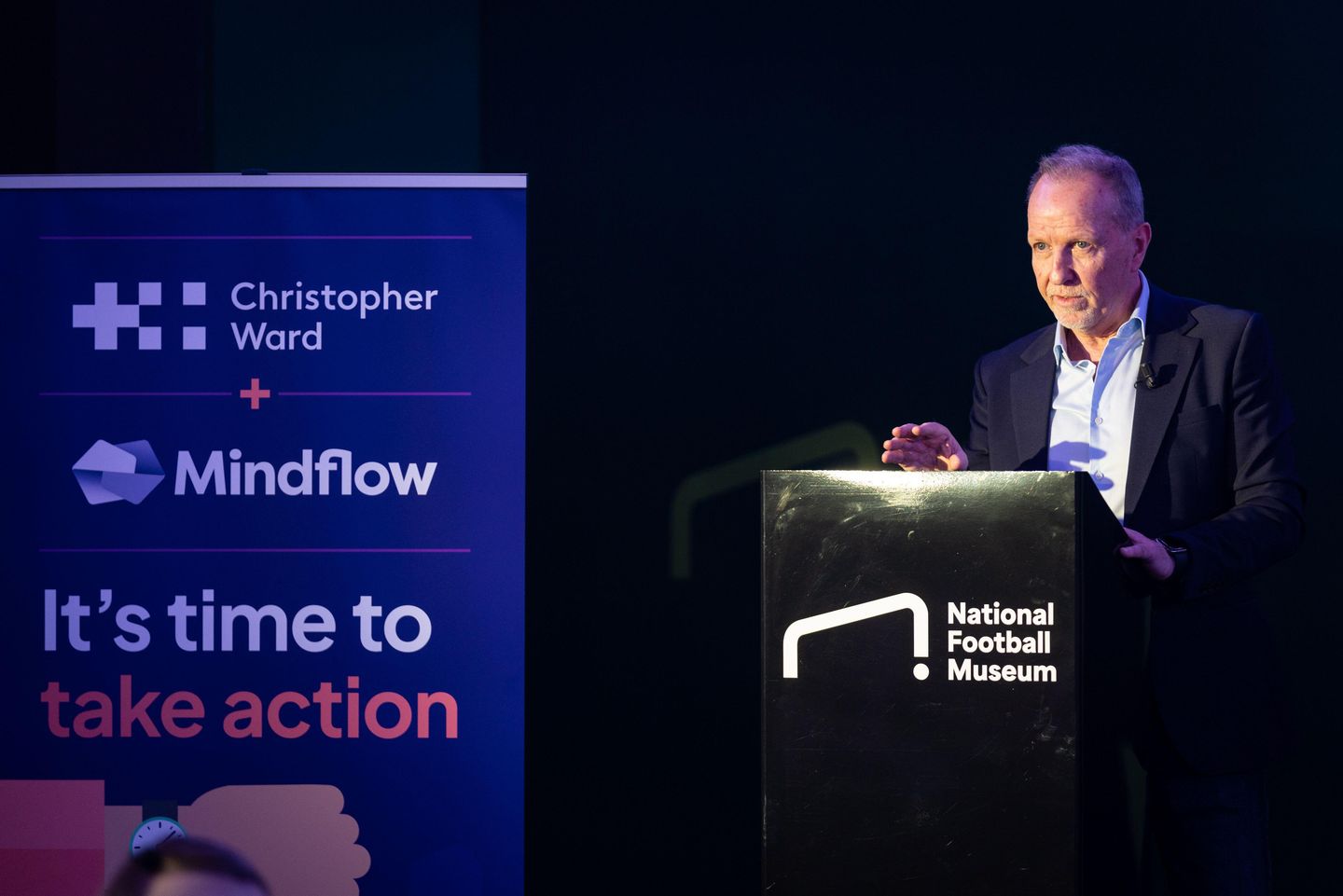
“There was something in the region of 35 deaths from health and safety issues last year across the UK,” explains Steven. “But 600 took their own lives. So you can see where the crisis actually lies. That’s the silent crisis we need to elevate, amplify and talk about. That’s the journey we’re on.
“Construction and football might seem worlds apart, but they’re built on many of the same foundations: working-class roots, high pressure, and a culture where strength too often means staying silent. We’re trying to change that.”
It was football, and Everton, which brought a man who had previously been reluctant to speak publicly into this world. Phil Brown, a construction tech entrepreneur, was the man who provided the funding for the successful Howard’s Way film – and his path crossed with Steven’s during the making of the movie.
“When Howard’s Way was out, I met Phil, who was born and bred in L4 and has gone on to do extremely well with digital technology and construction,” says Steven.
“He’s exactly the same age as me, and I happened to be his favourite player back in the day! He always wanted to wear the Everton number seven, and I was lucky enough to do it.
“We got to know each other extremely well and he called me one afternoon and talked about having listened to something on Radio 5 Live, which was jaw-dropping to him. He didn’t understand or realise there was a crisis within the construction industry.
“It happened to be Mike Salla, Everton in the Community’s Chief Public Health Officer, who was being interviewed. He was talking about suicide rates in construction. Phil couldn’t believe it.
“He and I got talking and, to cut a long story short, he invited me to become a mental health ambassador for his company, Causeway, because he wanted to see what he could do, what I could do with him, to address the silent crisis that’s out there.
“I jumped at it. I was living in Dubai at the time and it has given me purpose in life again, re-energised me. It’s given me a direction, a target and a goal. We hope to spread what I’m doing up and down the country and get football involved, because that opens doors to people.
“I literally got on a plane, came back to the UK, and started as a mental health ambassador with them. If we could save one life in construction, everything we do would be worthwhile.”
By its nature, it is difficult to quantify success statistically, but Mindflow has already had notable triumphs.
“We try to get former footballers involved and I had Jason McAteer out in Magong, at a site,” explains Steven. “Jason shared his story, his ups and downs, with 30-odd people. And within that group someone spoke out, not to Jason, but to the management team, and said, “I’m very, very burdened by my mental health. I’ve got a £40,000 gambling debt.” He hadn’t told anybody previously.
“That’s just one example of where people can end up in this industry, because gambling’s a pastime. There’s a lot of isolation, but this guy stepped forward and now he is being looked after.
“So that is a win. That could be saving someone’s life. And we have had several of those instances through this first year.
“Footballers are perfect for this because I’ve done the journey. I know what it’s like to be the centre of the universe and then to not even be in the universe. That’s what football does for you. I know there’s so many players out there who’ve got a really good story to share, and relatable stories. In an audience of PPE workers 90 per cent are men, and that’s where the suicides are.
“Men can get lost very quickly. I come from a footballing background, where you are thrust immediately into an adult world. In construction it’s the same, it’s very much into an adult world from day one. The bullying, the pressures within the team in a footballing dressing room and on the worksite are very similar environments.”
Steven experienced that dislocation himself from a very young age.
A supremely talented youngster growing up in the border town of Berwick, he was spotted by a Burnley scout at the age of 12 and spent his childhood travelling from coast to coast.
“I thought I’d absolutely cracked it,” smiles Steven. Although he wasn’t smiling at the time.
“When I was seven years old, I was playing football on the ice in the big yard in Berwick and I fell flat, straight on my face and smashed my teeth.
“So I had Dracula teeth until I was 16. I’m not kidding you. In those days dentists had a hammer and chisel, so from seven to 16 you’ll never see me smiling on a photograph because I was embarrassed by it!
“Peter Kirkley was the man who ran the famous Wallsend Boys Club and he would take me down on his minibus with all the other trialists.
“I’d have to get the train down from Berwick, when I was 12, and he’d pick me up at the train station and then we’d go picking people up on the way down to Burnley, for four and a half hours.
“I went down and obviously I made an impact because when I was 14, Burnley wanted to sign me as a schoolboy.”
Burnley had unearthed a rare talent. Steven made his debut aged just 17, as a substitute against Huddersfield, and didn’t put a foot wrong. Because he never touched the ball!
“It was a Tuesday night game in early April,” recalls Steven. “I was a sub, and my mum, dad and brother all came down to watch.
“They made the four-and-a-half hour trip and I got on with 10 minutes to go, and I’m not kidding you, I never touched the ball.
“I didn’t even take a throw-in. But when I went in afterwards, my dad said, ‘You were brilliant!’”
That was the start of Steven’s meteoric rise.
In a team of six teenage regulars he was consistently outstanding as the Clarets won the Third Division championship. When he scored his first Burnley goal it was a memorable one, crashed in from 30 yards at Elm Park against Reading.
Steven made 99 appearances in the next three seasons, scoring 16 goals and attracting the attention of top-flight managers everywhere.
Bob Paisley, manager of Liverpool, famously watched Steven on several occasions but Mersey rival Howard Kendall, watching from the terraces to avoid being spotted, was also an acutely-impressed observer, so much so he agreed to pay the significant sum of £300,000 for a player who was still just a teenager.
The young Steven was so wet behind the ears he turned up for contract talks with Everton with his girlfriend’s hairdresser!
“I was always going to sign,” he admits. “But Howard told me to meet him at Goodison. He wanted me to see and feel Goodison first. It was the close season and the sprinklers were on, the sun was shining and it was just like, ‘My God!’
“I was always going to sign once I’d seen Goodison and met Howard, but agents were just starting to appear then and I brought along my girlfriend’s boss, Jack Pollard, who was a hairdresser, as my agent.
“Why? Because he’d told me a story one day when I’d gone to pick up my girlfriend, ‘Oh, I was with Martin Edwards at the weekend’. I said, ‘Martin Edwards from Man United?’
“And he replied, ‘Yeah, he’s one of my friends’. So on the principle he knew Martin Edwards, I took him as my agent!
“He had hairdressers around Barnoldswick, Colne and Nelson. Howard had told me I was going to get £400 a week so I said to Jack, ‘Okay, I’ll leave you to negotiate it’ and I went out with my girlfriend.
“Jack was in there for about half-an-hour and I thought, ‘For God’s sake, what’s going on?’ So I knocked on the door and they had the wine out.
“I thought, ‘Oh my God, the deal’s done’. And Jack said, ‘You know what, Trev? I think 400 quid is a good deal, right?’
“He’d just been sat there having wine and probably talking about hair! That was it.”
That wasn’t the only faux pas Steven dropped in his first few days as an Everton footballer.
“I was a nervous wreck when I signed,” he adds. “I’d only just got really comfortable in the Burnley dressing room. I was never funny. I was easy to be picked on, although I did have my front teeth by then, though!
“I went away on holiday and I was so determined to do well I went to Majorca with my girlfriend and her mum and dad, and I was out running every morning, running, running, running.
“I thought I’m going to be as fit as I possibly can be. But I got myself dehydrated. I had to be put to bed for three days dehydrated. I was really ill. I’d lost a stone. I was as nervous as hell because I knew I was underweight.
“That was my first mistake. I already had a nice blue Ford Capri, but it was an old one and I thought all these famous footballers will be laughing at me. So I bought myself a new car, an Opel Manta, brand new, six gears, superstar Trev!
“I had no social confidence, so I thought I could buy it through the car and they would respect me. I drove in the first day, super nervous, and the guys were all hanging out of the windows at Bellefield as I got out of the car with my washbag and my boots.
“I thought, ‘What a brilliant welcome’.
“Then I heard what they were shouting. ‘Get rid of that car, get rid of that bloody car right now’.
“I’d bought a red car!
“The car was sold that afternoon. I swapped it for a black one. I lost about £500 in the transaction and my confidence was shattered.
“Then at the 11-o’clock break we all sat down, and I’m already very nervous. There’s Peter Reid there and Mark Higgins; there’s Neville Southall, Jim Arnold, Graeme Sharp, Adrian Heath and Andy King.
“Then Howard said, ‘Right, Trevor, Kingy, come here. We’re going to have a keepy-uppy contest’ – on my first day!
“Andy King was a super-confident guy and super talented. So we started and it was going on and on. It lasted about 15 minutes and it was going on too long so we had to sit down and do it on the floor. Anyway I dropped it.
“I think Howard had wanted me to show off my skills in front of the other lads but Kingy was off on a lap of honour, running around Bellefield!”
An undeniable Everton icon, Steven’s Goodison career was initially a slow-burner.
After being selected to start the first 15 games of the 1983 season, he was left out for the visit of Nottingham Forest in November. That happened to be the debut of a man who Steven would become intrinsically associated with, one Andrew Mullen Gray.
That omission was the start of four months on the sidelines, an exile which included the historic Milk Cup final at Wembley with Liverpool.
“Maybe it was the surroundings, the big crowds, the expectation, I don’t know, but Howard said, ‘I’m going to bring you out but you’re going to come with us everywhere’,” explains Steven.
“Alan Irvine came in and did well. I wasn’t playing, but I was there on every trip, travelling with the team, so I was involved. I think it was early March that he started to reintroduce me.”
The rest is history.
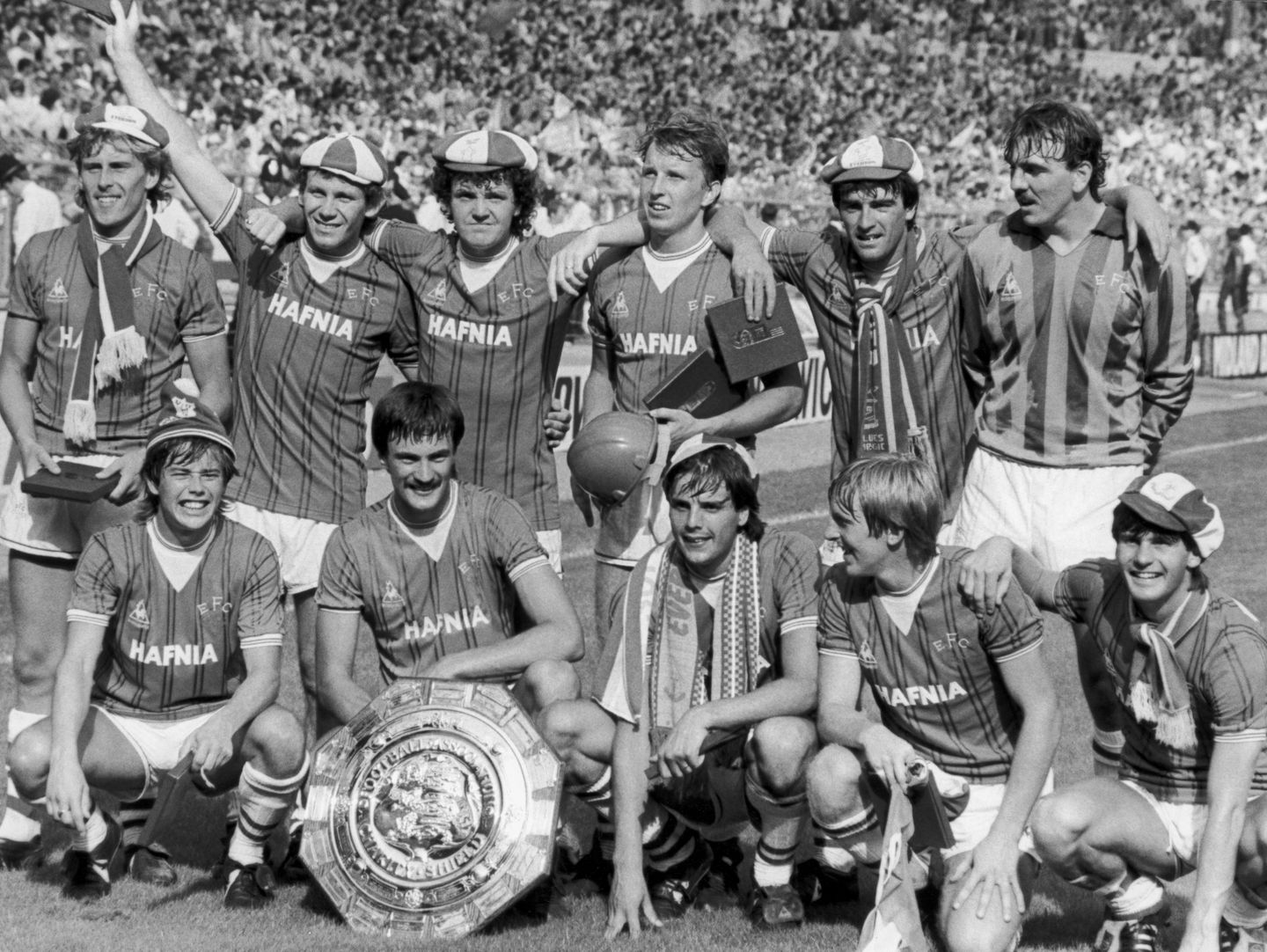
Steven played in the last dozen matches of the season, and the 13th was an FA Cup final at Wembley when a fine performance was capped by a cross stood up at the far post for Andy Gray to head in a match-clinching second goal.
“I needed that FA Cup final,” admits Steven. “Just playing in that game was such a boost to my confidence. I was playing against a full-back, Neil Price, who was as inexperienced as me, and John Barnes wasn’t really that bothered about chasing me. He was finding his way as well, wasn’t he?
“He was a young lad, too, because he and I are the same age. But that went well, and I thought, ‘My God, we’ve got silverware!’”
Like so many of that young squad, the experience of winning the FA Cup saw Steven blossom. The following campaign was the most successful single season in the Club’s history – and Steven played a huge part. Big performances and even bigger goals came on a regular basis.
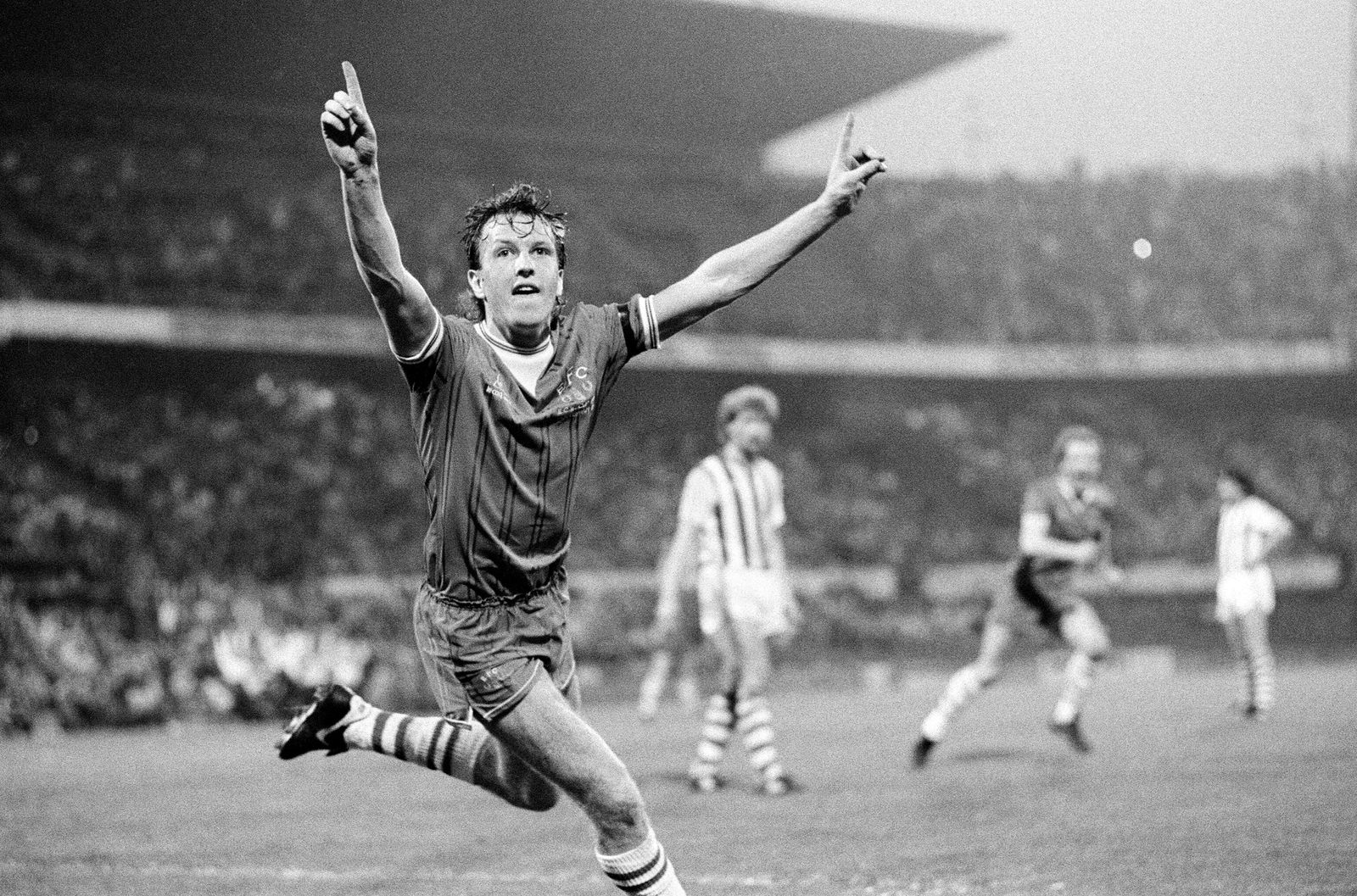
The match-clinching goal on a night widely accepted as Goodison’s greatest ever, against Bayern Munich, a goal in the subsequent European final, another in what was effectively a title-decider at Tottenham – and a stunning strike against Sunderland which saw most fans rave more about the pass which created it!
“Bayern Munich was the one,” reflects Steven, “Because it was so special for all of the players and all of the management and the Club and the fans who’d been watching for decades. That was just an incredible 90 minutes of football. The Spurs goal isn’t mentioned as much, probably because it was away from home so less of our fan base saw it live.
“But I can still see it now. because our fans were there behind the goal, to the right.
“It’s one of my favourite photographs, actually, the one where I’ve got my arms up and the number seven is visible on my back and the lads are coming running at me.
“The Sunderland goal, everyone talks about Brace’s assist, but that’s fine. It’s a great assist, isn’t it?”
Two seasons later, Steven was a title-winner again and top scorer in a title-winning team.
“Well, there were a lot of penalties, weren’t there?” said Steven self-deprecatingly.
“Penalties had become a bit of an issue for us prior to me taking them. Sharpy and Sheeds had missed a few and Inchy had missed one as well.
“So Howard asked me when I was in the shower at Bellefield! I thought, ‘That’s the manager next to me’, and then he said, ‘Do you want to take penalties?’
“Well, I’m not going to say no, am I?
“The next day I was practising penalties and that was it. I don’t know what my percentage was, but it was quite a high percentage.
“I would basically put the ball down, walk to the edge of the 18-yard box, not catch anyone’s eye, turn around and run at the ball as fast as I could so I don’t change my mind. Then just be positive with the strike. The majority of times it worked.”
Testament to the power of positive thinking, a lesson Trevor Steven is continuing to use in his new role trying improve the lives of others.





















© Copyright 1878 - 2026 Everton Football Club