Long Read
19 May 25
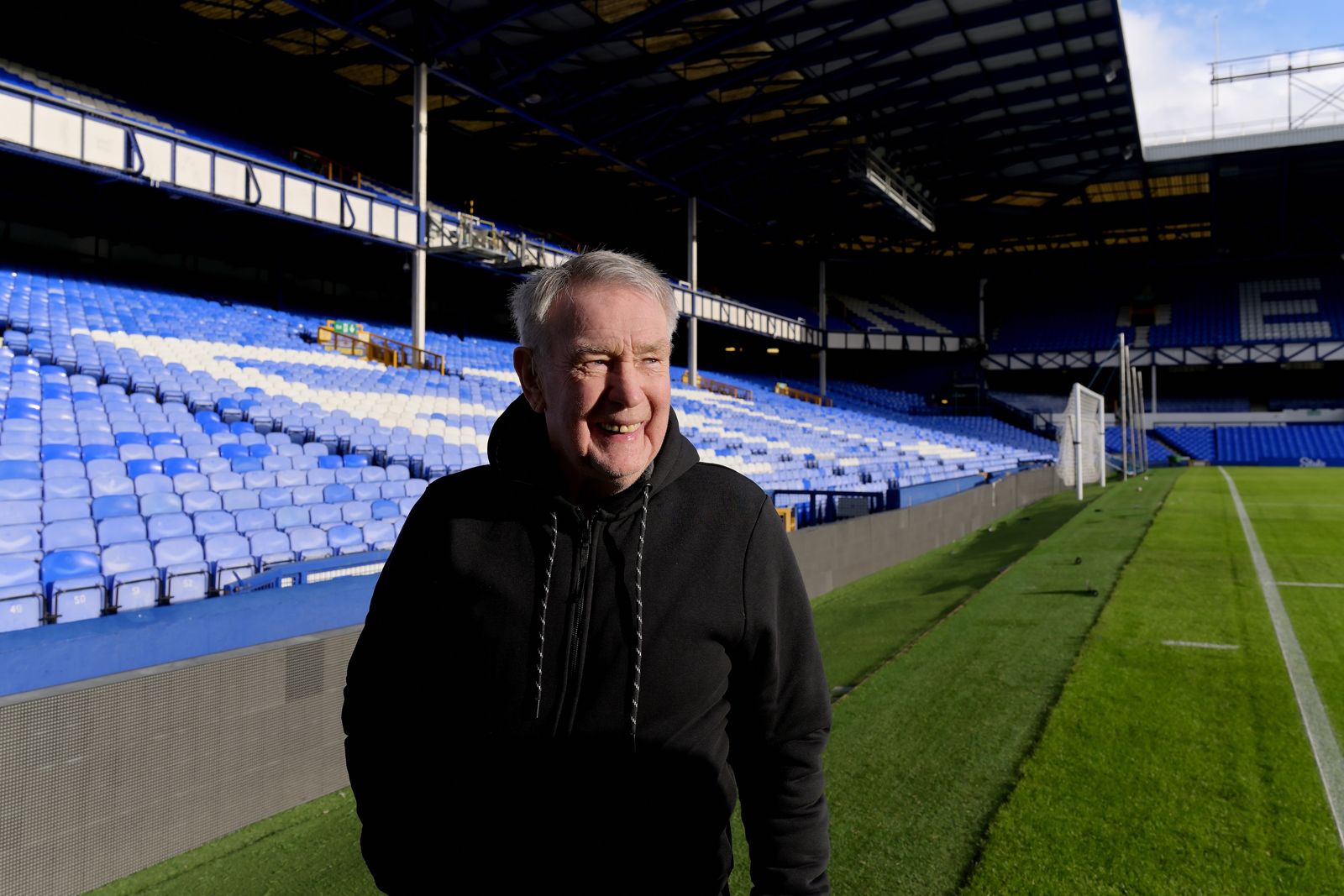
Goodison Park has been the backdrop to Colin Harvey’s life.
One of the greatest living Evertonians, Harvey survived the rite of passage, which was the famous Gwladys Street’s Boys’ Pen.
He was an excited apprentice who squeezed in for the final 20 minutes of the 1962/63 title-winning season against Fulham, having just clinched the ‘B’ Team title earlier that day; he made his first senior appearance at Goodison against Glasgow Rangers – in a match that is not considered a competitive first-team fixture, despite 42,000 watching it!
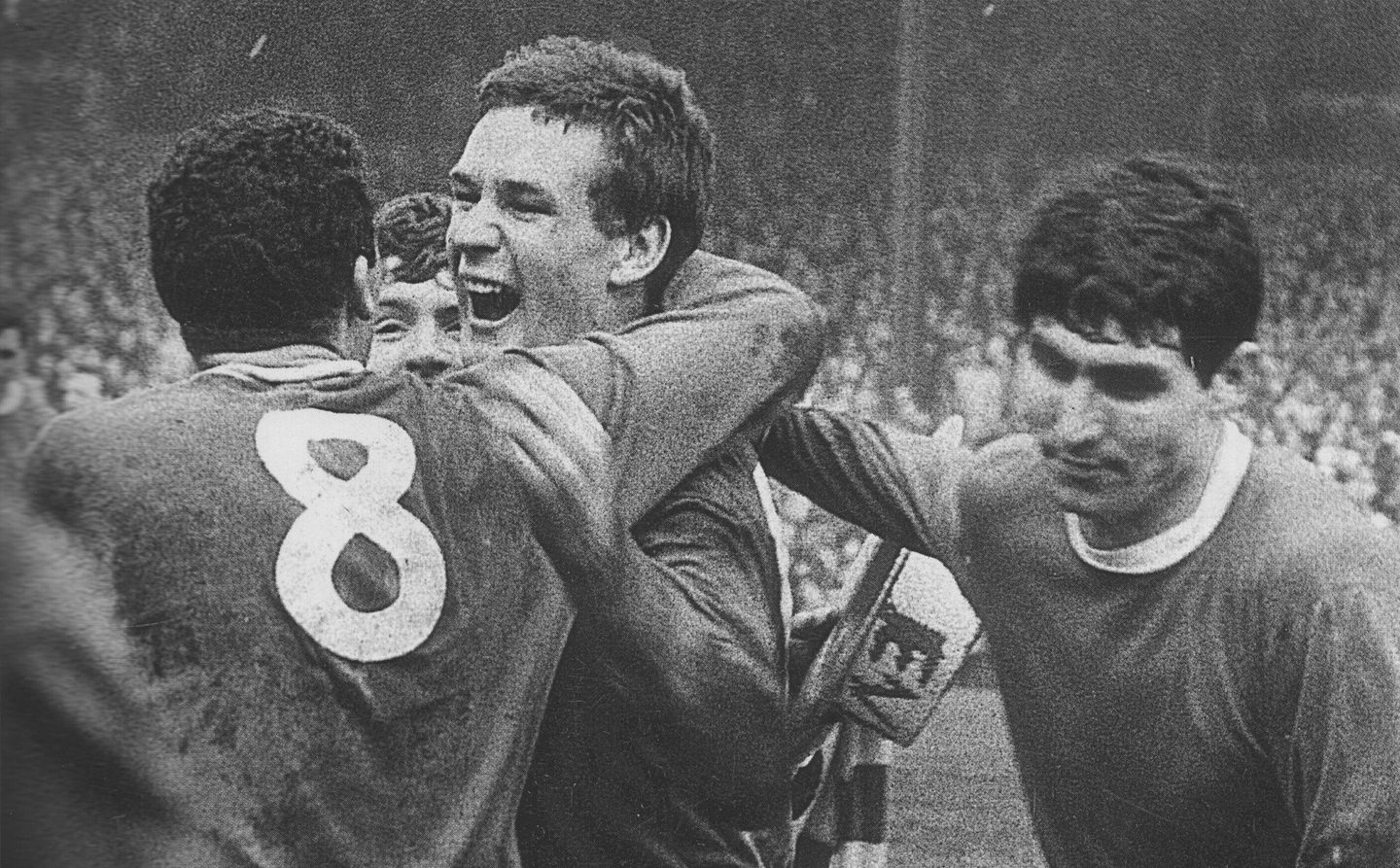
The midfielder’s near-400 first-team appearances which did count included a title-clinching wonder-goal against
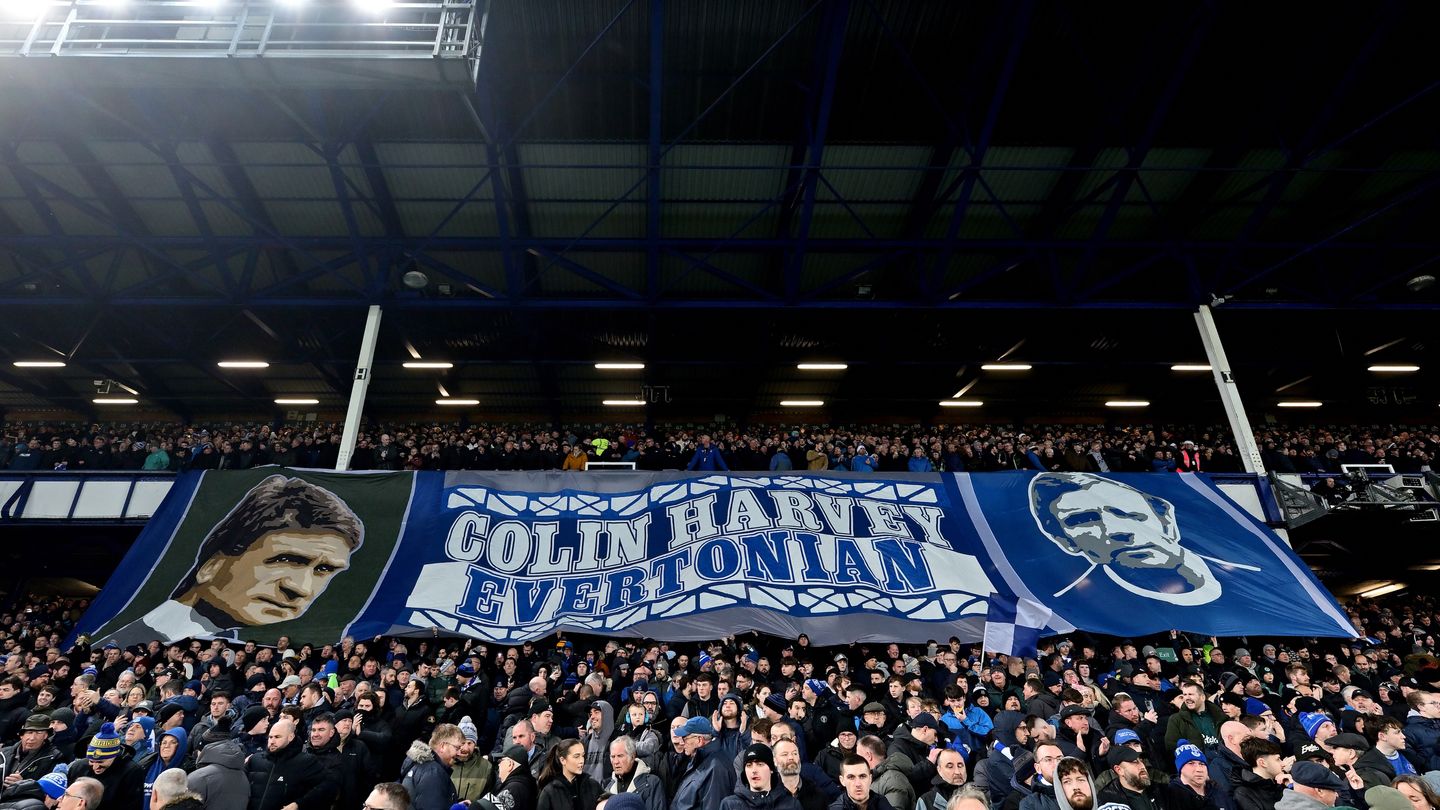
West Bromwich Albion, and when he left after more than a decade’s sterling service, he was celebrated with an iconic banner.
He returned to become the enormously influential coach of the most successful side in the Club’s history, became a manager who guided his team to two Wembley finals, then he was instrumental in the development of one of the most exciting talents in world football – a player who scored the first of his 208 league goals at Goodison. Oh, and he was on the Gwladys Street for every World Cup game staged at Goodison in 1966.
But he wasn't at Goodison on Sunday.
Now 80 years young and still a fiercely passionate Evertonian, Harvey explains: “I haven’t been for the past 18 months. I had a fall on the hip I had done. It was the first hip I had done 41 years ago this month, and I damaged it quite badly. So that’s bad, my back’s bad and my knees are bad – it’s hard work getting around. But I’ll be watching on television and I’ve got my memories. No one can take them away from me.”
And what memories.
Harvey belongs in the pantheon of the very greatest Evertonians.
There is a passage in that peerless writer Ivan Ponting’s Everton Player by Player book which sums up Harvey’s contribution to Everton simply as a player.
“Some Evertonians’ achievements are reflected in the number of great games they played,” he wrote. “It is more accurate to measure Colin Harvey’s in terms of great seasons.
“Never have the Blues been blessed with a footballer who combined technical excellence, long-term consistency and sheer open-hearted willingness to a higher degree than the undemonstrative but monumentally resolute midfielder. After he became established, the Goodison faithful were so accustomed to his unflagging standards that a rare indifferent display, perhaps once every three or four years, would stand out like a red scarf on the Gwladys Street terrace.”
“I have read that, actually,” blushes Harvey. “It was amazing to read. You set yourself high standards obviously, because you want to be as good as you possibly can be, but to read something like he wrote made me blush.”
Never one to seek fanfare, Harvey was born to be Blue.
There was a time when he even lived two streets down from Goodison Park.
“It was the road after Gwladys Street,” he explains. “My auntie lived there and after the war, there were so few houses left standing that we went to live with them. It was just a two up, two down, typical Coronation Street-style house.
“And we lived there for about four years with them. I was about four when we first moved there and I was eight when we left. It was perfect for my dad who was a massive Evertonian.
My grandad on my mum’s side was a big Blue, too, and they always used to walk to the games.
“For four years it was perfect for them. We were too young to go to the game, and I was maybe about nine or 10 when I first went… into the Boys’ Pen.”
Ah, yes, Everton’s Boys’ Pen. A relic of a bygone age where only the strong survived. A cage at the rear of the Gwladys Street where the region’s, let’s diplomatically say ‘most exuberant’ children, could watch football for a reduced rate.
Harvey smiles when it’s suggested he was brave to go in there.
“Oh, I know! It was a world of its own in there, honestly,” he laughs. “My dad used to drop my younger brother, our Brian, and me off, and I just used to tell him, ‘Stand behind me and we’ll just see how we go’.
“There was a pecking order. It was the Scotty Road lads at the front, then you worked your way back. We were about halfway back and watching the game was practically impossible.
“You were caged in on the corner of the Gwladys Street, and if you were lucky, you could just about see some of the pitch. This was the 1950s, and I was watching Tommy Egglestone, Peter Farrell, Don Donovan, Kenny Rea and Johnny King. But Wally Fielding was my favourite because he was a really good passer of the ball.
“My dad would drop us off and afterwards we’d meet him under the three balls of the old pawnbrokers, which later became a betting shop. It’s still there now, now on the corner, just where the statue is. He’d pick us up there then we’d walk down to Walton Road and get the bus back home.
“In fact, I remember one time we were on the bus and Dave Hickson got on the bus with us, travelling back with the fans to go home! My dad had a cigarette packet unwrapped and he borrowed a pen off someone and got him to sign it! Different times. He was on the bus after the game, travelling back to his house. I think he lived around Aintree way. Now the players will probably jump in a Rolls Royce!”
When Harvey witnessed his first league title celebrations he had progressed to the ranks of Everton apprentice.
He’d played at Bellefield in the morning. “My dad was there watching us,” says Harvey. “When I was playing, he didn’t go to watch Everton, he always went to watch me. Then we drove from there straight to Goodison and got in for the last 20 minutes.
“I’d been playing for the ‘B’ team and if we won our last game we clinched our league title. So I saw two league title celebrations that day!
“That was in May, and in September I was playing in the first team against Inter Milan. It just shows you how quickly things can change.”
Things changed dramatically from then.
After Harvey’s famous debut in a European Cup tie in Milan, his next first-team exposure was in a British Championship match against Glasgow Rangers.
The 18-year-old came on as a substitute after 35 minutes for the injured Jimmy Gabriel against Rangers, but because the fixture is not classed as a senior first-team fixture, John Hurst is still considered to be Everton’s first substitute.
Denied a place in the history books, Harvey still smiles at the memory of the fixture.
He recalls: “I got down to Goodison at about 9am on the morning of the match to do a little bit of training and Goodison Road was full of Scots lying there!
“That was nine o’clock in the morning and I thought to myself, ‘What’s it going to be like tonight?’ I soon found out. It was mayhem, absolute mayhem!”
If that was a baptism of fire to Goodison Park, his home debut a few months later in the First Division against West Ham was no less traumatic.
“It was Good Friday, 27 March, there were 61,000 inside the ground and I made a mistake in the first minute,” remembers Harvey. “I’d never played there in front of a crowd like that before. I’d played reserve-team games, but not in front of a crowd like that.
“I don’t mind admitting I absolutely bottled it after that.
“I thought I was never ever going to be a footballer because that was my first game at Goodison in front of a crowd, and I was absolutely useless. I made a mistake early on, let it get to me and just went from bad to worse.
“I just wanted the ground to open up and swallow me. The next day, we went in, and I was 12th man for the reserves, not a sub but 12th man. Harry Catterick had taken me completely out of things.
“At the time, I looked at it and I thought, ‘How low can you go?’ But a couple of weeks later I was thinking about it and thought he did the best thing he’d ever done for me by taking me out of the spotlight.”
It was an enormously effective measure.
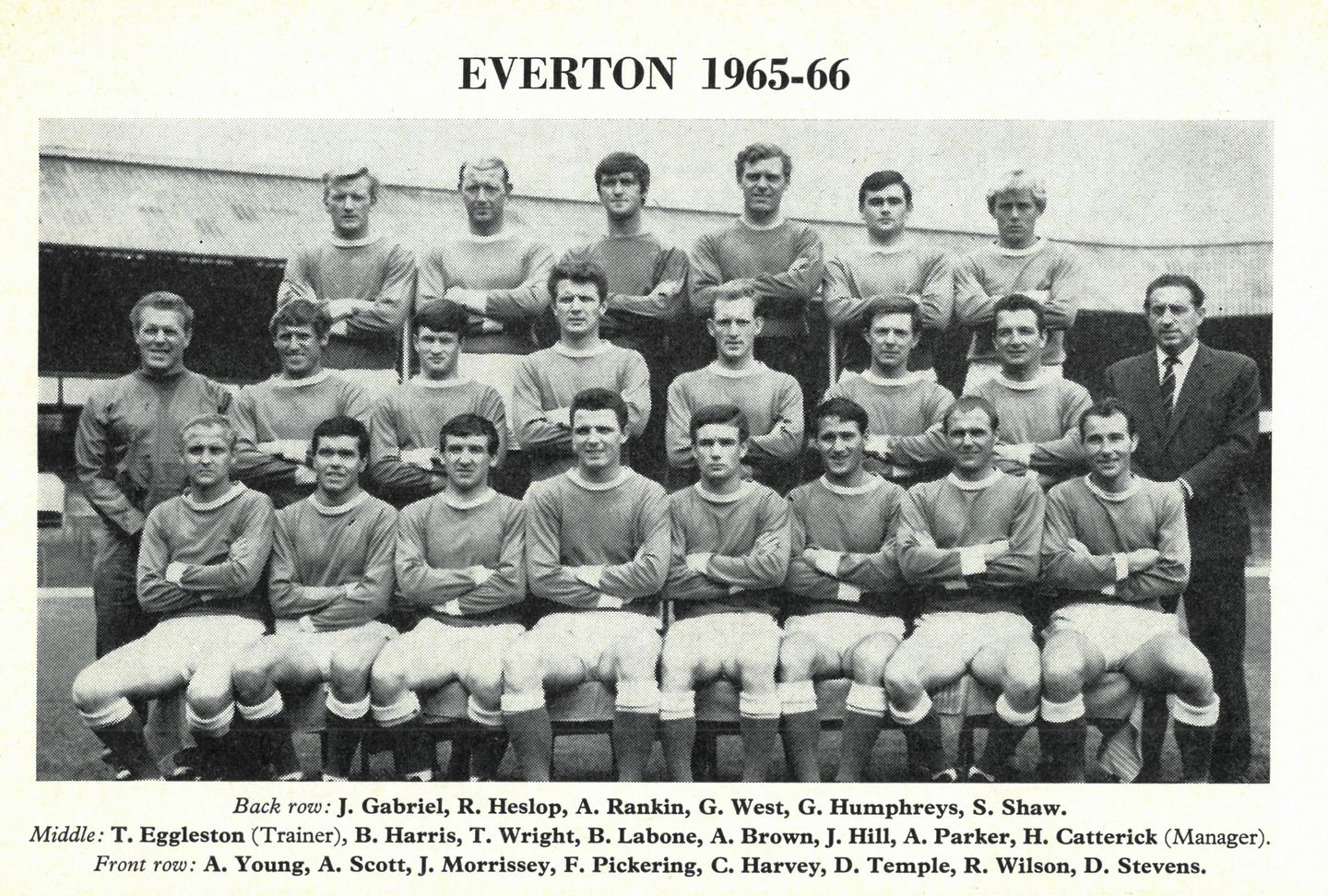
The following season, Harvey was back in the first team, permanently, and back in the spotlight.
After a first appearance of the season at Old Trafford on a Wednesday night, he lined up against reigning champions Liverpool at Anfield and scored his first senior goal in a 4-0 win.
“We were 3-0 up at half-time and I’d scored one of the goals,” Harvey laughs. “I took it on my chest and half-volleyed it over Tommy Lawrence’s head. We were 3-0 up at half-time, eventually won 4-0 and I thought, ‘They’re a doddle these derby matches’.
“I went back there at the start of the next season and got beat 5-0! Those were the highs and lows of derby games.”
Everton also won the Goodison return against the Reds in 1965, to complete a league double against our fiercest rivals, in front of 65,000 swaying, baying fans.
Goodison attendances throughout the swinging ‘60s were vast.
“They were incredible days,” says Harvey. “The crowds were unbelievable. They were the days when all the lower tiers were terracing with all standing. Imagine how many people were actually standing to watch a game. It was an amazing place. People were getting passed over people’s heads when they’d fainted, and they’d be lying around the edge of the pitch while the game was going on. It was incredible.”
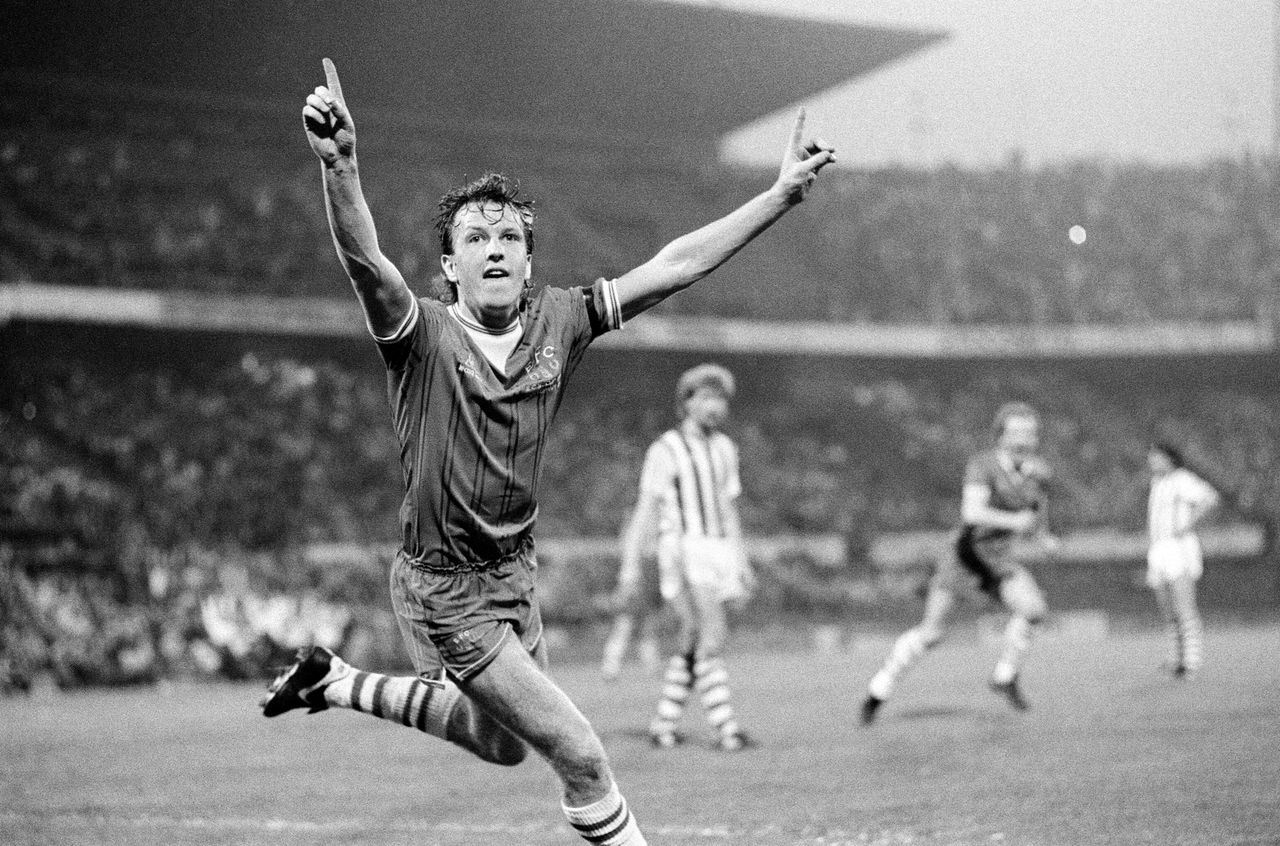
There were 58,523 crammed into Goodison – officially – the night Everton clinched their seventh league title with a 2-0 victory over West Bromwich Albion.
And the night featured a collectors’ item – a Colin Harvey goal from 20 yards that was one of the greatest ever seen at the old stadium.
Sparse words can do justice to a goal which included Harvey dribbling past several players and letting fly from 20 yards into the roof of the Gwladys Street net to spark pandemonium.
“I’d never scored a goal like that before,” he admits. “After I’d beaten all those players, I thought, ‘What am I going to do?’ I was pulled to my right, so I just had a go, and it flew into the top corner!”
If Harvey wasn’t renowned for the quantity of his goals – 24 in his 388 appearances – he certainly was for the quality of his performances.
When Harvey left the Club in the autumn of 1974, more than a decade after his debut, a famous banner detailing his transfer fee to Sheffield Wednesday underlined the depth of the affection in which he was held by the Goodison faithful. It read: “£70,000 is an insult to the White Pele”.
“I didn’t see it,” insists Harvey. “Because I’d been making my debut for Sheffield Wednesday at Bolton while Everton were playing Wolves at Goodison. But afterwards the phone was going all the time and people were saying there was a banner at the Park End at Goodison saying something about me and the white Pele – it was a very proud moment for me!
“For someone to say that about you comparing you to probably the best player that ever played the game is really unbelievable. To think that people thought that much of me was hard to believe.”
That was just the first act in Harvey’s Everton story. He returned as a coach, was enormously influential in creating the most successful side the Club has ever enjoyed, later managed the Blues to two Wembley finals then moved back into Youth Development where one of the most prodigiously talented players ever to grace Goodison Park was breaking through — a young striker, Clive Tyldesley memorably urged us to ‘remember the name’.
“I’d rank Wayne Rooney right up there with the best players in world football,” Harvey says. “You look at the Peles and Messis and Johan Cruyff, and I’d put him just below them. Maradona would be my top pick, Kenny Dalglish would be right up there and then just below that Wayne Rooney, who I thought was going to be the really top player. Honestly, when he was younger, I thought he was going to be the greatest footballer ever, an all-time great.
“For a while, up until the Euros when he got injured against Portugal, he was the best player in the world. He was lean, quick, strong and didn’t care about anyone, but when he went to Manchester United he had to play slightly differently.
“When he was in that front three with Ronaldo and Carlos Tevez, none of them ever did the work on the left-hand side when anyone broke out, and he did it all. He’d chase back, chase up, do this, do that, and I think that took the edge off him a little. It took the edge off him because he was doing all the donkey work as well as doing all the attacking stuff as well. But the three of them were unbelievable.”
That was a few years after Rooney’s breakthrough goal against Arsenal, a moment which has deservedly passed into Goodison folklore.
“When you saw that you just thought, ‘That’s a 16-year-old doing that! To hit a ball that hard at that age, it was unbelievable,’” adds Harvey.
“That was one of the great days at Goodison and we’ve had plenty. I watched the 1963 side win the championship, then we had those great days in the 1960s. Then you go to the ‘80s side which was brilliant, with some brilliant footballers.
“I think of all the great nights, great days and great afternoons. The really great ones for me were seeing us winning things in the ‘60s, then the ‘80s team winning so much with some great players, including Trevor Steven, who for me was the best of them all.
“I saw all the games played at Goodison in the 1966 World Cup. I bought a mini-season ticket for the Gwladys Street and it was brilliant. It was just a magical time to watch.
“It was a fantastic period. I went to every game, by myself, and it was brilliant.
“I’ll be sorry when the last match comes around, but I have got my memories of the place and no one will ever take them away.
“Great memories from being a kid going and watching in the boys’ pen to going out there and playing.”
But there is one moment emblazoned on Harvey’s mind which he’ll never forget – his first sight of the lush emerald green turf of Goodison Park.
“I’ll never forget my first sight of the pitch,” he concludes. “I went from school and got to Goodison and the street was empty. There was no way to get in. The main entrance was on Goodison Road and the players’ entrance was further down. Anyway, this lad arrived, and I said, ‘How can you get in?’
“He showed me a door with a little knob that you pulled back and turned which opened the door. So I got in with him and that was my first sight of the pitch with no one on it. I’d never seen the ground empty before. I was only 14 or 15 and it was magical. I’ve never forgotten that.”
And Evertonians will never forget Colin Harvey – one of Goodison Park’s greatest-ever servants.





















© Copyright 1878 - 2026 Everton Football Club